
Why Fracture Surgery Often Raises What a Crash Claim May Be Worth
Key Takeaways: Surgery can raise the value of a broken bone car accident settlement because it usually brings higher medical bills, a longer recovery, more lost income, and permanent scars that California law may treat as disfigurement. Compound fractures and breaks that need ORIF with plates, screws, or rods carry higher risks of infection, nonunion, and nerve damage. When documented, these can support a higher claim value. Surgery does not guarantee a bigger payout, though. The at-fault driver’s policy limits often cap recovery, and California’s minimum is only $30,000 per person for policies issued or renewed on or after January 1, 2025. Under Proposition 213 (Civil Code § 3333.4), people convicted of DUI in connection with the crash, uninsured vehicle owners, and drivers who cannot show financial responsibility may lose non-economic damages, with limited exceptions. They can still recover economic damages. Clear proof that surgery was needed, steady treatment, photos of scars, and a surgeon’s notes on future procedures may help counter insurer arguments. You generally have two years to file a lawsuit under Code of Civil Procedure § 335.1, but claims against government agencies usually must first be presented within six months.
Surgery can raise the value of a broken bone car accident settlement because it usually means more medical costs, a longer recovery, and lasting physical effects. A fracture that needs plates, screws, or rods, and possibly more than one operation, generally leads to higher bills, more time off work, and permanent scars. Each may increase the damages you can recover under California law. Surgery does not guarantee a bigger recovery, though. The at-fault driver’s insurance limits, your own insurance status, any share of fault assigned to you, and the strength of your evidence all affect what a claim may be worth.
If you broke a bone in a Sacramento crash, The Law Offices of Dale R. Gomes is ready to fight the insurance company for you. Call 916-706-1351 or contact us now for a free review of your case before important deadlines pass.
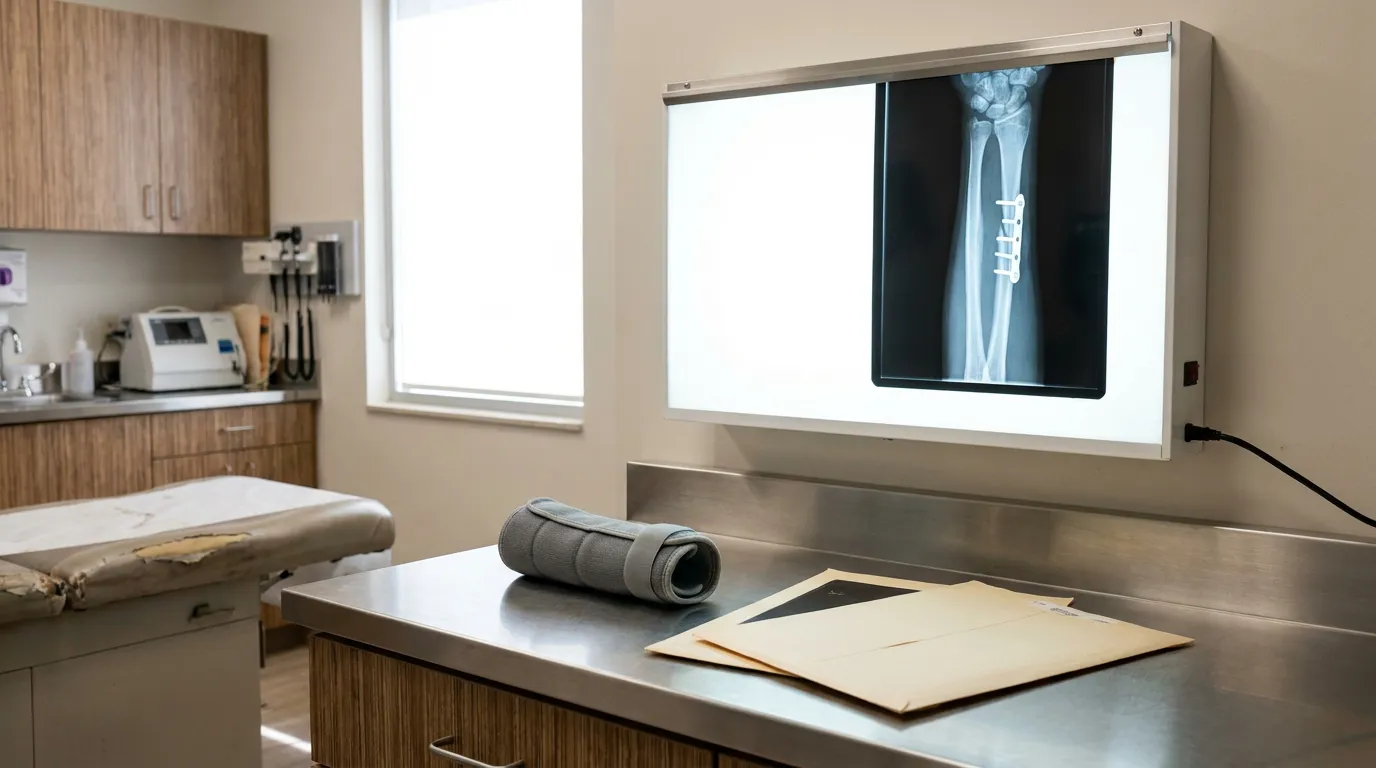
What Separates a Surgical Fracture From a Simpler Break
Doctors decide on surgery based on how bad the break is, and insurers often look closely at that decision. Many simple, closed fractures can be held still with a cast or splint. Displaced, shattered, or open fractures often need open reduction and internal fixation (ORIF), in which a surgeon realigns the bone and holds it in place with hardware.
Compound Fractures and Infection Risk
A compound fracture happens when the broken bone pierces the skin and leaves an open wound. According to Cleveland Clinic’s overview of open compound fractures, these injuries need immediate care because of the infection risk. Treatment may include surgery with plates, screws, or rods, and some patients need more than one operation, followed by physical therapy.
Complications That Can Add Long-Term Value
Compound fractures carry a higher risk of problems than closed fractures. These include infection, nerve or blood vessel damage, and nonunion, which means the bone fails to heal. These problems can lead to more surgery, longer disability, and permanent impairment. When documented and linked to the crash, they may support a higher claim value.
How Surgery Shapes Each Type of Damages
A surgical fracture claim usually affects both economic and non-economic damages. Economic damages are measurable losses, such as bills. Non-economic damages pay for harm that is real but harder to quantify. For the basics, see our guide on how settlements are calculated in California.
Economic Losses in an ORIF Car Accident Claim
Bills for fracture surgery add up fast, but you can generally recover only the amounts actually paid or owed for past care, not the full amounts billed (Howell v. Hamilton Meats). Damages may include:
- Emergency care, imaging, and the surgeon’s fees
- Hospital stay and the cost of the implanted hardware
- Follow-up visits and any surgery to remove hardware
- Physical therapy, which can last for months
- Lost wages during recovery and reduced future earning power
- Expected future medical care, when a doctor supports it
Pain, Suffering, and Disfigurement
Surgical scars from plates and screws may count as disfigurement, which California law generally treats as a non-economic loss. Physical impairment, chronic pain, and losing activities you used to enjoy can also carry real weight. If a case goes to trial in Sacramento County Superior Court, jurors may consider how visible scars and limited movement affect your daily life.
| Factor | Non-Surgical Fracture | Surgical Fracture (ORIF) |
|---|---|---|
| Typical treatment | Cast or splint | Plates, screws, rods; possibly several surgeries |
| Recovery period | Often shorter | Often longer, with physical therapy |
| Complication risk | Generally lower | Higher (infection, nonunion, nerve damage) |
| Scarring | Usually minimal | Surgical scars (disfigurement) |
Insurance Limits Can Cap Your Broken Bone Car Accident Settlement
The at-fault driver’s policy limits often set the real ceiling on what you can recover from insurance. Under California’s financial responsibility minimums, Vehicle Code § 16451(a)(2) requires policies issued or renewed on or after January 1, 2025, to carry at least $30,000 for bodily injury to one person, $60,000 for all people hurt in one crash, and $15,000 for property damage. Before 2025, the minimums were $15,000, $30,000, and $5,000. If a policy issued or renewed before that change covered your crash, the lower limits may apply.
Fracture surgery bills alone can easily top $30,000. An ORIF procedure, a hospital stay, and months of therapy may use up a minimum policy before anything is paid for pain and suffering. Under Vehicle Code § 16451(b), the minimums will rise again, to $50,000/$100,000/$25,000, for policies issued or renewed on or after January 1, 2035. When the at-fault driver’s coverage falls short, an attorney may look at other sources, such as your own underinsured motorist coverage, other liable parties, or the at-fault driver’s personal assets. In California, underinsured motorist coverage generally applies only after the at-fault driver’s limits are used up.
💡 Pro Tip: Ask your own insurer for a copy of your declarations page right away. Knowing your uninsured/underinsured motorist limits early can change how your claim is handled.
When Prop 213 Can Reduce Your Surgical Fracture Claim Value
Under Civil Code § 3333.4(a)(1)-(3), part of Proposition 213, an injured person may lose the right to non-economic damages in three situations. These are: being convicted of DUI in connection with the crash, owning a vehicle in the crash that was not insured as the law requires, or driving without being able to show financial responsibility. You may still recover economic damages, such as medical bills and lost wages.
For a surgical fracture claim, this rule can cut the claim’s value sharply, because scars and pain often make up a large share of it. There is an exception. Under Civil Code § 3333.4(c), an uninsured vehicle owner hurt by a driver who is convicted under Vehicle Code § 23152 or § 23153 may still recover non-economic damages. Whether Prop 213 applies depends on the facts, so get a careful legal review first.
Building a Post-Surgery Car Accident Claim That Holds Up
Insurers often argue that surgery was not needed or that an older condition caused the damage. To counter those arguments, you generally need clear proof that the crash caused the injury and that surgery was medically necessary. If the crash made an existing condition worse, you may still recover for that harm. Following your treatment plan, keeping records of every visit, and photographing your scars as you heal can strengthen your case.
Crashes on Highway 50, I-80, and the busy streets around Capitol Mall can happen at speeds that cause severe fractures. Dale Gomes knows Sacramento’s roads, its courts, and how local insurers tend to value claims. With more than 100 jury trials behind him, he prepares every case as if it will go to trial. That preparation can give him leverage when an adjuster offers less than an injury is worth. The firm also serves injured clients in El Dorado Hills and Folsom.
💡 Pro Tip: Ask your surgeon to write down whether you will likely need hardware removal or other future procedures. Insurers often find a documented future need harder to dismiss.
Deadlines That Can End a California Fracture Surgery Lawsuit
Under Code of Civil Procedure § 335.1, you generally have two years from the date of injury to file a personal injury lawsuit in California. If a government agency is involved, such as with a city vehicle, you generally must first present a written claim to the agency within six months under Government Code § 911.2. Some exceptions exist, such as extra time for injured minors, but they are limited. Talking with a broken bone car accident settlement lawyer early can help protect your rights.
Frequently Asked Questions
1. Does surgery automatically increase my broken bone car accident settlement?
No, surgery alone does not guarantee a higher payout. It usually increases documented damages, but recovery still depends on proof of fault, any share of fault assigned to you, insurance limits, and the facts of the case.
2. Can I recover for surgical scars in California?
In many cases, yes. California law generally treats disfigurement as a non-economic loss, subject to limits such as Civil Code § 3333.4.
3. What if my bills exceed the at-fault driver’s policy?
You may have other options. Depending on the facts, underinsured motorist coverage, other responsible parties, or the at-fault driver’s personal assets may be available.
4. Should I accept the insurer’s first offer before I finish recovering?
If you settle before you reach maximum medical improvement, your future care may go unpaid. Once you sign a release, you generally cannot reopen the claim.
5. How long do I have to file?
Generally, you have two years under Code of Civil Procedure § 335.1. Claims against government agencies usually must be presented within six months.
Protecting the Full Value of Your Fracture Surgery Claim
Surgery can increase the value of a fracture claim, but insurance limits, Prop 213, and filing deadlines can all limit what you actually recover. Strong medical records, a clear picture of the available coverage, and acting on time may give your claim the best chance.
Don’t let the insurance company decide what your surgery and recovery are worth. The Law Offices of Dale R. Gomes brings trial-tested advocacy to seriously injured Sacramento residents. Call 916-706-1351 or schedule your free consultation today, before California’s statute of limitations runs out.
Disclaimer: This content is for informational purposes only and is not legal advice. Every case is unique, and results may vary. Consult an attorney about your specific circumstances.