
How the Hospital Lien Act California 3045.1 Shapes a Fix 50 Work Zone Injury Recovery
Key Takeaways: A road worker’s death on the Fix 50 corridor has renewed serious questions about who is responsible when Sacramento freeway construction turns deadly. California imposes a general duty of ordinary care and follows a pure comparative negligence model, so fault can be shared among drivers, contractors, and public agencies without automatically barring recovery. Catastrophic crashes often generate enormous hospital bills, and understanding how providers assert liens under the hospital lien act California 3045.1 is essential to protecting what an injured victim ultimately keeps. Public entities may be liable for dangerous property conditions, but only under narrow, fact-specific standards. Deadlines differ sharply, generally two years for personal injury claims but often just six months for government claims, so early action is critical. This article explains the legal landscape for anyone injured in a Sacramento-area work zone.
A road worker’s death along the Fix 50 project has once again put Sacramento freeway safety 2026 concerns in the headlines. The tragedy is a stark reminder that highway construction corridors, where lanes narrow and traffic funnels past crews at speed, remain among the most dangerous stretches of road in the region. For residents of Placerville, CA who commute daily on Highway 50 toward the capital, this is not an abstract issue but a real and present risk. When a serious crash happens in a coned-off lane, the legal questions that follow are complex, and the financial pressure from medical bills can arrive almost immediately.
This development matters because a catastrophic freeway injury rarely involves a single, obvious defendant. Fault may be divided among a speeding motorist, a contractor that failed to set up proper traffic controls, or a public agency responsible for the work zone design. Each party may point fingers at the others, and each has insurance counsel working to minimize exposure. Understanding your rights early, and how medical liens attach to any eventual recovery, can make the difference between a full recovery and one erased by outstanding charges.
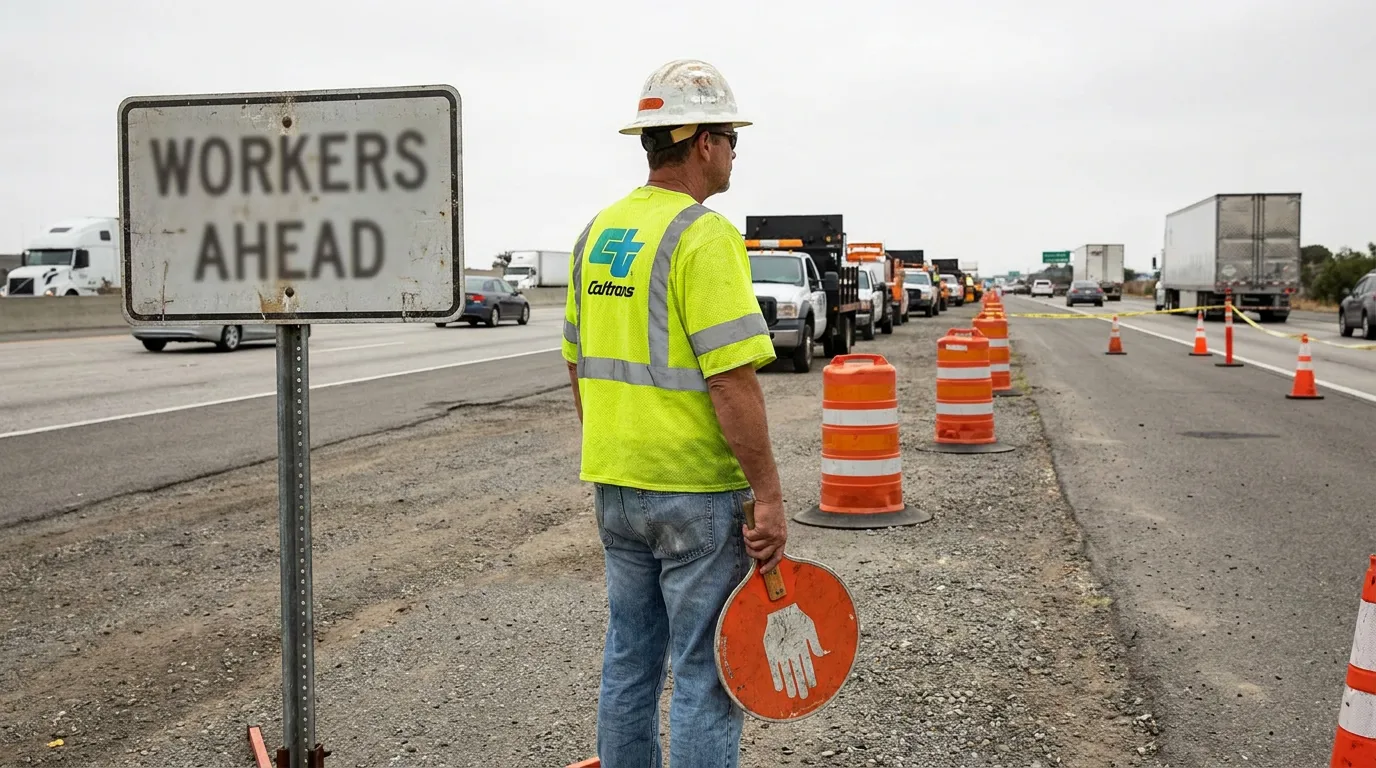
The Legal Backbone of a Construction Zone Injury Claim
California law starts with a foundational principle: everyone must exercise ordinary care to avoid injuring others. The statute codifying the general duty of ordinary care provides that a person is responsible for injuries caused by a lack of reasonable care in managing their conduct or property, subject to a reduction for the injured party’s own carelessness. This is the statutory basis for negligence claims arising from a Fix 50 work zone crash, including cases where a driver strikes a worker or fails to slow in a restricted lane. Because the Civil Code applies statewide, the same standard governs incidents in both El Dorado County and Sacramento County.
Fault in these cases is often shared, not absolute. California follows a system where damages are reduced by the injured party’s percentage of responsibility. Under the pure comparative negligence rule, a plaintiff may recover a proportional share of damages even when substantially at fault, a model followed by only a minority of states, including California and New York. Most states instead bar recovery at a 50% or 51% fault threshold, Florida, for example, adopted a 51% threshold for most negligence claims in 2023 under HB 837, meaning a plaintiff found more than 50% at fault is barred from recovery, and a handful apply strict contributory negligence. This distinction can significantly affect the value of a work zone liability California claim.
Public entities can also face liability, but only under demanding conditions. California law recognizes that a government body may be responsible for injury caused by a dangerous condition of its property where that condition created a substantial and reasonably foreseeable risk of the kind of injury suffered, and where either a public employee negligently created the condition or the entity had actual or constructive notice of the danger with sufficient time to protect against it. Courts apply these standards narrowly and require detailed proof. Claims against public agencies also carry shorter administrative deadlines than ordinary civil suits, a point discussed further below.
Why the Hospital Lien Act California 3045.1 Deserves Your Attention
When a construction zone crash produces severe trauma, hospital charges can reach into six figures before treatment is complete. California hospitals frequently assert liens against a patient’s eventual settlement or verdict to recover the cost of care. The hospital lien act california 3045.1 framework allows a provider that has furnished emergency and ongoing services to claim a portion of a personal injury recovery, subject to statutory limits and procedural requirements. For an injured victim, this means part of any settlement may be claimed by the hospital before funds reach the patient.
Understanding lien rights early protects the value of your case. A lien that is improperly asserted, inflated, or not properly perfected may be challenged or reduced, and skilled negotiation can meaningfully increase the net amount an injured person keeps. This is one reason the hospital lien act california 3045.1 rules should be reviewed at the outset of a claim rather than after settlement. In many cases, coordinating lien resolution with the underlying liability claim is essential to a meaningful recovery.
California also imposes strict pleading requirements on debt collectors pursuing hospital debt. A collector suing on a balance that originated with a general acute care hospital must allege specific facts, including the itemization of interest and fees, the default date, and the hospital’s account details. These protections give injured patients leverage when charges from a catastrophic freeway injury are pursued against their recovery, and they underscore why documentation matters from day one.
A Placerville Family Faces the Aftermath
Consider a hypothetical Placerville commuter, driving westbound on Highway 50 through the Fix 50 corridor during evening congestion. A distracted driver in the next lane drifts into the narrowed work area, triggering a chain collision that leaves our commuter with spinal fractures and a lengthy hospitalization. The family, already anxious, soon receives notice that the treating hospital has filed a lien against any future recovery. They now face insurers, a contractor’s defense team, and mounting bills all at once.
This scenario captures the pressure many injured families experience. Evidence such as dashcam footage, witness statements, traffic control plans, and photographs of the lane configuration can be decisive, yet it may disappear within days if no one preserves it. The circumstances in this example echo the broader risks highlighted by recent Highway 50 road worker death reporting for El Dorado County drivers. Acting quickly to document the scene and secure records often shapes the strength of a construction zone injury claim.
Practical Steps After a Work Zone Crash
Taking the right steps early can protect both your health and your claim. The period immediately after a serious collision is when critical evidence is most vulnerable and insurance adjusters are most active. Consider the following measures where circumstances allow:
- Seek prompt medical care and keep every bill, record, and discharge instruction.
- Photograph the vehicles, lane markings, cones, signage, and injuries if you are able.
- Collect names and contact information for witnesses and responding officers.
- Avoid recorded statements to the other party’s insurer before speaking with counsel.
- Preserve any dashcam or nearby surveillance footage before it is overwritten.
Each of these actions supports the four elements of a negligence claim: duty, breach, causation, and damages. Insurers routinely dispute causation and downplay injury severity, so thorough documentation is your strongest counterweight. A trial-tested advocate can help ensure nothing is lost during this window.
The Litigation Advantage in High-Stakes Cases
Not every claim settles, and defendants know which firms are prepared to try a case. The Law Offices of Dale R. Gomes brings extensive courtroom experience, with a record of more than 100 jury trials, to serious injury matters across the Sacramento region. When insurance companies refuse to offer fair value, the willingness to take a case before a Sacramento Superior Court jury can change the negotiation entirely.
Local knowledge strengthens that position. A seasoned Sacramento crash attorney understands the Highway 50 and I-80 corridors, the Capitol Mall area, and the courts where these disputes are resolved. The firm also serves surrounding communities including El Dorado Hills and Folsom, giving families across the metro a trusted local advocate.
How Does This Impact Me?
What Does This News Mean for My Case?
A work zone fatality on Fix 50 signals heightened scrutiny of freeway safety and liability. If you were injured in a similar construction zone incident, multiple parties may share responsibility, and California’s pure comparative negligence system means partial fault does not automatically bar recovery. The specific facts, however, drive every outcome, so an individualized review is important.
Does This Change My Deadline to File?
California generally applies a two-year statute of limitations for personal injury claims, but exceptions exist. Claims against a public entity typically require a government administrative claim within a much shorter window, often six months, and courts interpret extensions narrowly. Deadlines are not automatic or absolute, and in limited circumstances they may be tolled, so confirming your specific timeline early is essential.
How Do Hospital Liens Affect My Recovery?
A hospital may claim part of your settlement to satisfy its charges. Reviewing the lien for accuracy and proper perfection can, in many cases, reduce the amount owed and increase what you keep. Coordinating this with your liability claim generally produces the best net result.
What Should I Do Next?
Focus first on medical treatment, then on preserving evidence and understanding your rights. Avoid giving recorded statements to the at-fault party’s insurer, and consider consulting counsel before accepting any early offer. Outcomes depend on the specific facts, so timely, informed action matters.
Protecting Your Future After a Sacramento Freeway Tragedy
The Fix 50 work zone death is more than a headline; it is a warning about the real dangers along the region’s busiest corridors. For injured victims and their families, the path forward involves proving fault among potentially several parties, defending against insurer tactics, and navigating hospital liens that can quietly erode a recovery. California law provides meaningful protections, yet those protections often depend on early, careful action and a clear understanding of the applicable deadlines. No result is ever guaranteed, and every case turns on its own facts.
If this development affects you or someone you love, informed guidance can help you understand your options. The team at The Law Offices of Dale R. Gomes offers experienced, trial-ready representation for serious injury claims across the Sacramento metro. Call 530-497-5921 or reach out to our team today to discuss your situation before critical deadlines pass.