
Recent Highway 50 crashes near Placerville have been a stark reminder that serious collisions in El Dorado County can change a family’s life in minutes. In April 2026, a crash near Placerville left two people with serious injuries after a vehicle went off the road and down an embankment, prompting a Highway 50 shutdown and medic helicopter response. In late May 2026, another Highway 50 collision resulted in a fatality, underscoring how quickly ordinary travel in the Sacramento region can turn into a high-stakes legal and medical crisis. (sacbee.com)
For injured people in Placerville, CA, these crashes are more than headlines. They raise practical questions about evidence, fault, reporting, insurers, and deadlines. California law gives injured victims important rights, but those rights depend on facts, documentation, and deadlines that courts may interpret narrowly in disputed cases. (nhtsa.gov)
Why this legal landscape matters after a Placerville-area crash
California car accident claims start with negligence. Under Civil Code section 1714, a person is generally responsible for injuries caused by a lack of ordinary care. In a crash case, the injured person must show duty, breach, causation, and damages, backed up with records, photographs, witness statements, medical proof, and the collision report. (nhtsa.gov)
That basic rule becomes especially important on Highway 50, where high speeds, lane changes, weather, and congestion can complicate fault. California follows pure comparative negligence, meaning an injured person may still recover damages even if they share some responsibility, though recovery is reduced by their percentage of fault. Early evidence preservation matters because insurers will look for ways to shift blame and reduce value. (nhtsa.gov)
The timing piece is just as important as the liability piece. California courts’ self-help guidance states that personal injury claims generally must be filed within two years, while property-damage claims generally have a three-year limitations period. Exceptions may exist in limited circumstances, but courts often interpret tolling and deadline extensions narrowly. California deadline guidance makes that distinction important for anyone trying to decide what to do after a car accident in California. (nhtsa.gov)
A realistic Placerville scenario after a serious collision
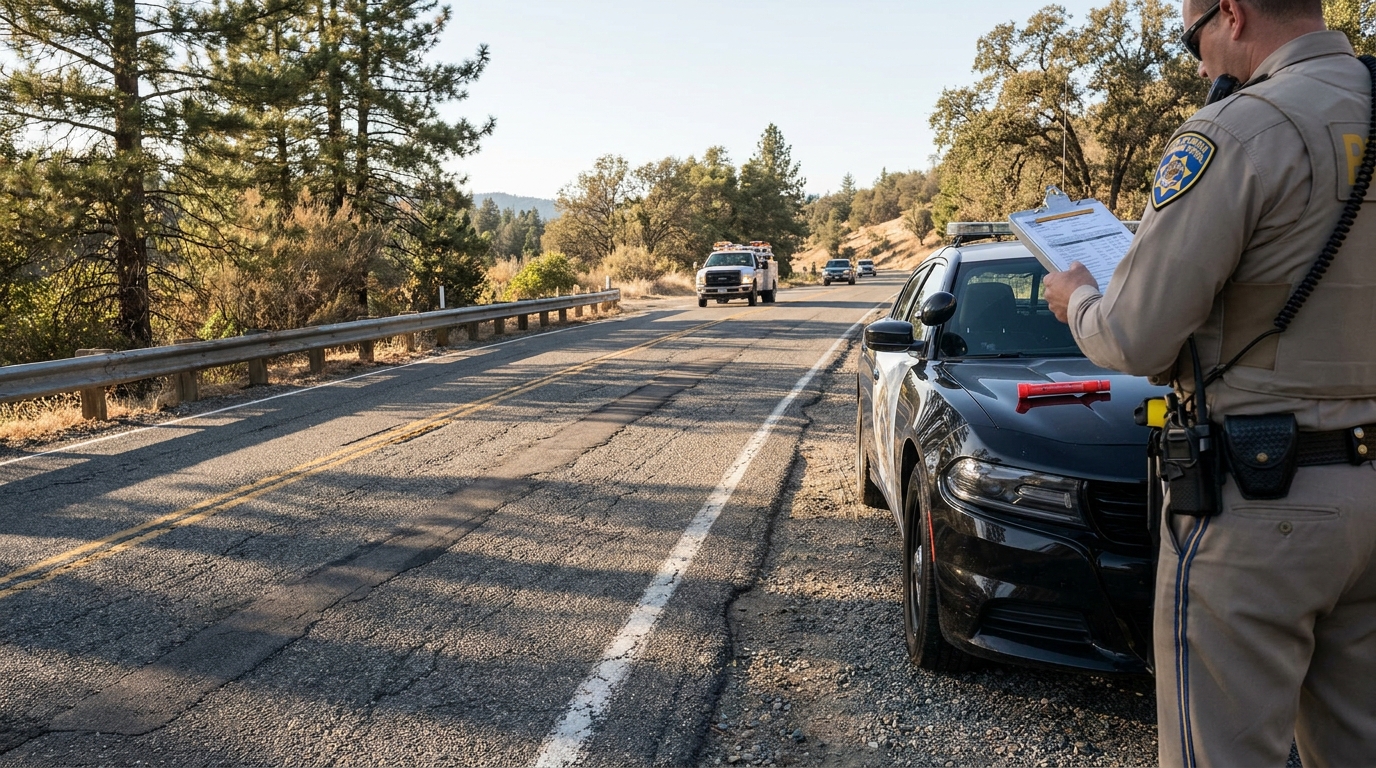
Imagine a driver from Placerville heading west on Highway 50 toward Sacramento when another vehicle makes an unsafe movement and causes a violent side-impact collision. The injured driver feels shaken with neck and shoulder pain, initially thinking the problem is "just soreness." By that night, symptoms worsen. Days later, the insurance adjuster calls requesting a recorded statement before the driver has reviewed the report or understood the diagnosis.
That scenario is common because serious injury cases rarely feel organized in the first 72 hours. People are dealing with tow yards, missed work, imaging appointments, medication, transportation issues, and insurer pressure all at once. For readers in Placerville, El Dorado Hills, and Folsom, the legal problem is not only the crash itself but the risk of losing evidence before the case is fully understood.
The first legal issue is preserving proof
In California, the crash report can become a foundational piece of evidence. Under the Vehicle Code, people with a proper interest, including injured parties and their attorneys, may obtain the traffic collision report, which can contain party information, diagrams, statements, and witness details. In serious cases, the CHP may require supplemental reports if the original reporting is insufficient, meaning the evidentiary record can continue developing after the crash. Vehicle Code reporting rules help explain why these documents matter. (sacbee.com)
The second legal issue is avoiding preventable damage to the claim
Insurance carriers often evaluate claims based on what they can document early, not just what the injured person feels. If there are delayed treatment gaps, missing scene photos, no witness follow-up, or inconsistent descriptions, the defense may argue injuries were minor, unrelated, or exaggerated. Understanding how to prove fault is not just a litigation issue for trial lawyers; it is a day-one issue for anyone deciding what to do after a car accident in California.
The practical steps that usually matter most
After a serious crash, the most important next move is usually not arguing with the other driver or the insurer. It is creating a clean factual record that will shape both settlement discussions and, if needed, litigation in Sacramento Superior Court.
What injured victims should focus on early
A disciplined response can make a major difference in a serious injury case. The goal is to protect health first, then preserve proof before memories fade and records disappear.
- Get medical evaluation promptly even if symptoms seem delayed or manageable.
- Photograph the scene, vehicles, injuries, debris, and roadway conditions if you can do so safely.
- Identify witnesses and save contact information before people leave.
- Request or track the crash report information from the investigating agency.
- Keep all medical bills, discharge papers, work-loss records, and repair estimates in one place.
- Use caution with insurer statements before understanding the full extent of injuries.
- Avoid minimizing your condition in texts, emails, or social posts that may be taken out of context.
These steps matter because California law requires proof of damages, not just proof that a collision occurred. Medical expenses, lost earnings, pain-related limitations, and future treatment needs all require supporting evidence.
Fault, comparative negligence, and insurer strategy
One of the most misunderstood parts of California crash law is that shared fault does not automatically bar recovery. California’s comparative negligence system can still allow an injured person to recover damages even with partial blame. But every percentage point matters because a finding of shared fault reduces compensation. Comparative negligence remains a core concept in Highway 50 litigation. (nhtsa.gov)
That is one reason insurers often focus on speed, distraction, lane position, following distance, or inconsistent statements. They are building a reduction argument. For people with significant injuries, especially those facing long treatment or lost wages, those fault arguments can materially affect case value.
Serious collisions are still a broader safety problem
The local news cycle around Highway 50 fits into a larger traffic-safety picture. NHTSA announced in April 2026 that estimated U.S. traffic deaths fell in 2025 to 36,640, a 6.7% decrease from 2024. Even so, thousands of people continue to suffer serious injuries and deaths each year, and California safety planning materials still identify fatalities and serious injuries as major statewide concerns. (nhtsa.gov)
State enforcement trends point in the same direction. In April 2026, the California Highway Patrol announced a 24-hour enforcement effort focused on speeding and reported that CHP officers issued more than 491,000 speed-related citations in 2025. For Highway 50 drivers moving between Placerville, Sacramento, and the Capitol Mall area, speed remains a serious factor in severe-injury collisions. (chp.ca.gov)
Why litigation strength still matters in higher-value injury claims
Not every serious case settles quickly, and some should not. When liability is contested, injuries are substantial, or the insurer downplays future losses, courtroom readiness matters. The difference between a paper claim and a trial-ready case often comes down to how well evidence was preserved and whether counsel is prepared to prove negligence and damages under pressure.
That is particularly true in cases involving major orthopedic injuries, traumatic brain injuries, spinal harm, or long-term disability. These are not minor fender-bender disputes. They are cases where medical chronology, expert support, witness credibility, and local litigation knowledge can shape the outcome. Readers looking for a Sacramento car accident lawyer are often looking for someone who understands both the insurance playbook and the demands of trial.
How Does This Impact Me?
What does this mean for my injury claim after a Highway 50 crash?
It means your case will likely depend on documentation more than assumption. Even when fault seems obvious, insurers may dispute causation, injury severity, or your share of responsibility. Stronger early records make it easier to evaluate and present the claim.
Does this change my deadline to file in California?
Usually, no. For most personal injury claims, the civil filing deadline is generally two years from the date of injury, while property-damage claims are generally subject to a three-year period. Some exceptions may apply in limited circumstances, but courts interpret tolling arguments narrowly, and claims involving public entities can involve separate and much shorter administrative deadlines.
What should I do next if the insurance company calls me?
Be careful, organized, and deliberate. Basic claim reporting may be necessary, but a recorded statement or early settlement discussion can create problems if you do not yet know the full medical picture. In serious injury cases, it often helps to gather the report, treatment records, and wage-loss information before making detailed statements.
What if I may have been partly at fault?
That does not necessarily end the case. California’s comparative negligence system may still allow recovery, but any assigned percentage of fault reduces damages. Evidence about speed, visibility, lane position, timing, and witness observations becomes especially important.
Can I wait to see if my pain goes away before acting?
Waiting can create risk. Some symptoms do improve, but delayed treatment or missing records can make it harder to connect the injury to the crash later. Prompt medical evaluation and early evidence preservation usually put you in a better position, even if the final legal decision comes later.
What injured Californians should take away now
The recent Highway 50 crashes near Placerville are a reminder that knowing what to do after a car accident in California is not just about safety at the scene. It is also about protecting your ability to prove negligence, document damages, respond carefully to insurer tactics, and act before filing deadlines become a problem. In serious cases, small early decisions can affect the value and direction of the entire claim.
For injured people in Placerville and the broader Sacramento area, the practical message is straightforward. Get medical care, preserve evidence, understand that outcomes depend on specific facts, and treat deadlines seriously. If you are researching what to do after a car accident in California because a recent Highway 50 collision left you with significant injuries, clear legal guidance can help you assess your options without guessing.
If you need more information after a serious crash, The Law Offices of Dale R. Gomes may be able to help you understand the next steps. You can call 530-497-5921 or contact us today to discuss your situation and learn more about your options under California law.