
Injured at a Marriott or Hilton in Sacramento? Liability May Reach Further Than You Think
Key Takeaways: If you get hurt at a chain hotel like Marriott or Hilton, more than one party may be responsible, including the property owner, the hotel management company, the national brand and any outside security or maintenance contractors. Under California’s premises liability standard (CACI 1000), anyone who owns, leases, occupies or controls property generally must use reasonable care to keep it reasonably safe. An injured guest generally must prove duty, breach, causation and harm. Whether the hotel knew or should have known about the hazard is often the main question. The national brand may be liable if it controlled the daily operations that caused the injury, or if its conduct led guests to reasonably believe it ran the hotel. California generally allows two years to file a personal injury lawsuit. A claim against a government entity usually requires a written claim within six months.
If you get hurt at a chain hotel, responsibility often falls on more than one company. The name on the sign may belong to a national brand like Marriott or Hilton, but a separate investment company may own the building, and a management company may run it day to day. If the hotel hired outside guards, a security contractor could be involved too. California law can place safety duties on each of these parties, depending on who controlled the area where you were hurt and what each party knew.
You do not have to sort out a hotel’s corporate structure by yourself. The Law Offices of Dale R. Gomes has handled more than 100 jury trials and takes on insurance companies on behalf of seriously injured people. California’s filing deadlines can pass quickly. Call 916-706-1351 or contact us now to talk about your case.
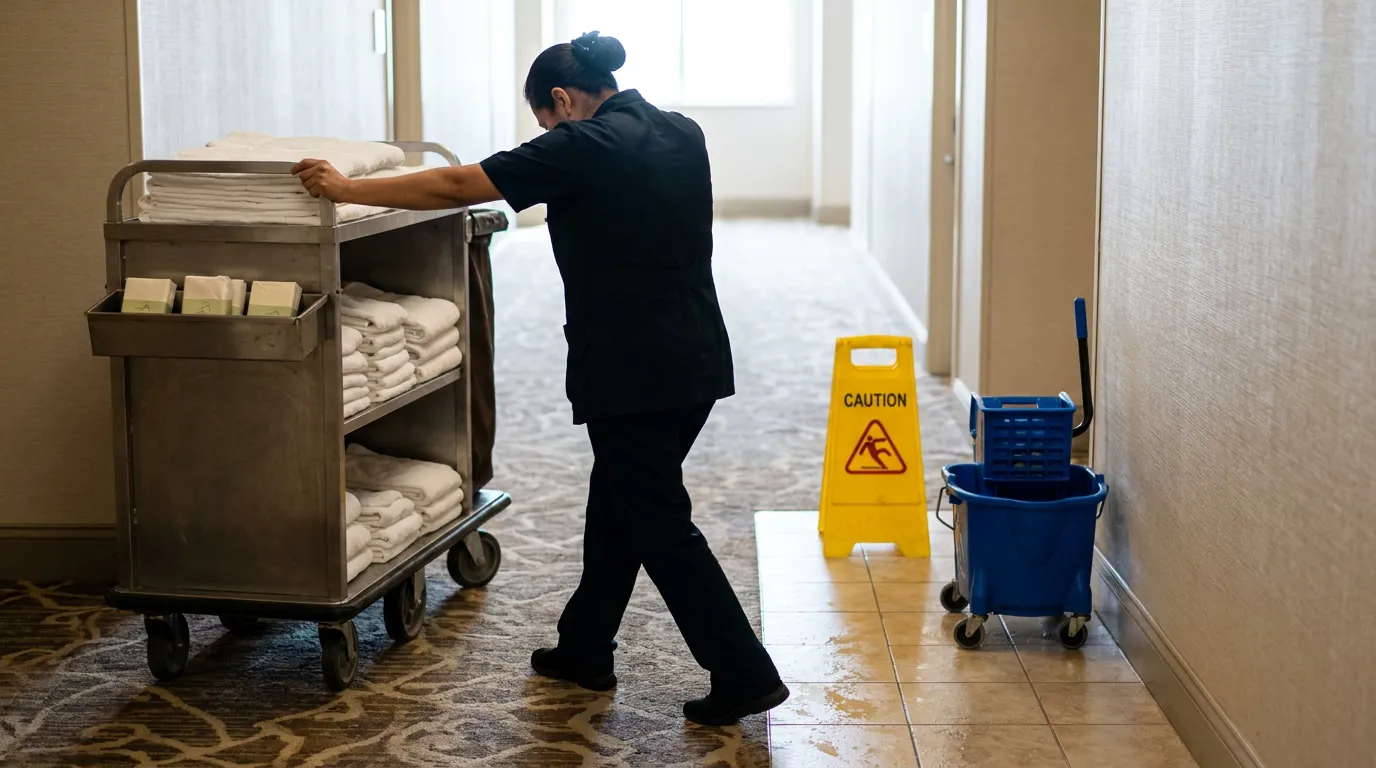
Why Your Hotel Injury Lawsuit May Involve Several Companies
Most guests assume the brand on the sign owns and runs the hotel, but that is often not the case. Many Marriott and Hilton locations are franchised or run under management agreements. In a franchise, the national company licenses its name and standards to an independent owner, who may hire a management company to handle staffing, maintenance and daily operations. Each company may carry its own insurance, and each insurer may try to shift blame onto the others.
The Parties Who May Share Responsibility
Several parties may be responsible after a California hotel injury. Which ones apply depends on how the hotel is set up:
- The property owner: often a separate investment company that holds title to the building
- The hotel management company: the operator that hires staff and runs daily operations
- The franchisor: the national brand, such as Marriott or Hilton corporate
- A private security contractor: an outside company hired to patrol the property
- Other contractors: such as maintenance vendors, depending on the facts
| Party | Possible Basis for Liability |
|---|---|
| Property owner | Premises liability duties; statutory safety duties such as smoke alarm maintenance |
| Management company | Innkeeper role; control of daily operations |
| Franchisor | Control over operations or apparent agency |
| Security contractor | Responsibility for guards’ conduct under Cal. Bus. & Prof. Code § 7582.15 |
The Premises Liability Standard California Applies to Hotels
California generally requires anyone who owns, leases, occupies or controls property to use reasonable care to keep it reasonably safe. Under CACI 1000 premises liability, a California civil jury instruction, the owner or occupier must act as a reasonably careful person would. That includes taking reasonable steps to find unsafe conditions and to fix them or warn of them. The duty comes from Civil Code § 1714.
To win, an injured guest generally must prove that the defendant owned, leased, occupied or controlled the property, was negligent in using or maintaining it, that you were harmed, and that the negligence was a substantial factor in causing your harm. Under California’s comparative fault rules, a court may reduce your recovery if your own carelessness also played a part. You can read more in our overview of premises liability in California.
Notice: Did the Hotel Know About the Hazard?
Whether the hotel knew, or should have known, about a dangerous condition is often the main question in these cases. If the hotel itself created the condition, you may not need to prove notice. Wet lobby floors, broken railings, torn carpet on stairways and poorly lit parking lots often lead to these disputes. If you slipped on a pool deck or in a bathroom, our page on slip and fall injuries explains how these claims typically work.
Statutes can also show how notice works. Under Cal. Health & Safety Code § 13113.7(d)(2)(B), once someone tells the owner or its authorized agent about a smoke alarm that does not work, the owner must fix it. That rule covers smoke alarms only, but it shows why records of guest complaints and maintenance requests can matter so much.
💡 Pro Tip: Ask the front desk to write up an incident report before you leave the property, and request a copy. If staff refuse, write down the employee’s name, along with the date and time.
How Owners and Management Companies Can Share Duties
California law can place safety duties directly on the property owner, not only on the brand. Under Cal. Health & Safety Code § 13113.7(d)(1)-(2), the owner of a hotel or motel that rents units must test and maintain the required smoke alarms. At a franchised Marriott or Hilton, that owner is often a separate investment company, which may be a proper defendant even if it does not run the hotel day to day. When a management company acts as the owner’s agent and controls operations, it may share responsibility for safety.
The Innkeeper Relationship
California’s Alcoholic Beverage Control law defines a hotel partly by the relationship between guests and the owner or operator, which is that of innkeeper and guest. Cal. Bus. & Prof. Code § 23355.2(f) uses this definition for licensing. Separately, Cal. Civ. Code § 1861.1(a) defines a hotel keeper broadly to cover any person, corporation, partnership or agent that takes payment for rooms and keeps the right to access and control them. Neither definition sets injury-liability rules, but they suggest California does not always treat only the deed holder as the innkeeper.
When the National Brand May Be Liable
Franchisor liability is possible, but brands often fight it and the outcome depends heavily on the facts. Courts generally treat franchisees as independent businesses. Even so, courts generally rely on two main theories to hold a franchisor responsible for a franchisee’s negligence: the control test and apparent agency.
The Control Test
Courts may look at whether the franchisor kept general control over the daily operations that caused the injury. In California, Patterson v. Domino’s Pizza (2014) held that brand standards meant to protect the trademark and ensure uniformity generally do not make a franchisor liable. Liability is more likely when the franchisor actually directs the specific operations at issue, such as staffing, security or maintenance.
Apparent Agency
Under the apparent agency rule, a court may hold a brand responsible if its conduct led a guest to reasonably believe the parent company ran the hotel and the guest relied on that belief. Booking on a brand website, using brand rewards programs and seeing the same logos throughout the property may support this theory. Many courts, however, find that branding alone is not enough.
Security Contractors and Crimes on Hotel Property
If an assault or other crime happens at a hotel, the outside security company may be another defendant. Under Cal. Bus. & Prof. Code § 7582.15, a licensed private patrol operator is legally responsible at all times for the good conduct in the business of its employees, agents and managers. If a guard causes an injury through misconduct or negligence, the contractor may share responsibility with the owner and the management company.
California law also sets limits that injured guests should understand. Cal. Gov. Code § 12950.3 requires hotels to give human trafficking awareness training every two years to employees likely to come into contact with victims. However, § 12950.3(e) states that an employee’s failure to report a trafficking case does not, by itself, make the hotel or the employee liable. California courts usually require that the crime was reasonably foreseeable, often shown through prior similar incidents, and that the hotel’s security measures were unreasonable and caused the harm.
Protecting Your Chain Hotel Injury Lawsuit From the Start
Evidence can start disappearing quickly after a hotel injury, so act promptly. Hotels may record over security footage, repair the hazard or lose track of employees who saw what happened. Take photos of the condition and your injuries. Get contact information from witnesses. Keep your room receipt and booking confirmation, and get medical care right away.
Deadlines matter as well. California’s general statute of limitations for personal injury is two years from the date of injury under Cal. Code Civ. Proc. § 335.1. If a public entity is involved, the Government Claims Act (Cal. Gov. Code § 911.2) generally requires a written claim within six months of the injury.
💡 Pro Tip: Ask the hotel in writing to preserve all video footage and maintenance records from the day you were hurt. Keep a copy of your request.
Frequently Asked Questions
-
Can I sue Marriott or Hilton corporate directly?
Possibly. It usually depends on whether the brand controlled the daily operations that caused the injury, or whether the apparent agency rule applies.
-
What if the hotel says a management company runs it?
A management company may share liability as the operator or innkeeper, and you may name several parties in the same case.
-
How long do I have to file a California hotel injury claim?
Generally, two years from the date of injury under Cal. Code Civ. Proc. § 335.1. Claims involving government entities usually require a written claim within six months.
-
Does a hotel have to prevent every crime on its property?
No. Liability generally depends on whether the crime was reasonably foreseeable and whether the hotel’s security measures were reasonable.
-
What compensation might be available?
Damages may include medical expenses, lost wages, reduced future earning ability, and pain and suffering. A court may reduce your recovery if you are found partly at fault.
Holding Every Responsible Party Accountable
Liability at a chain hotel can extend to the owner, the management company, the national brand and outside contractors, depending on the facts. Identifying every responsible party can affect how much insurance coverage is available to pay for serious injuries. Dale Gomes represents injured people throughout the Sacramento region, including El Dorado Hills and Folsom.
Insurance companies for hotel chains are often prepared to fight claims, and you should be prepared too. As a Sacramento hotel injury lawyer with more than 100 jury trials behind him, Dale Gomes prepares cases for trial when the insurer does not offer a fair settlement. The Law Offices of Dale R. Gomes is ready to review your case before the deadline runs out. Call 916-706-1351 or schedule your consultation today.
Disclaimer: This content is for informational purposes only and is not legal advice. Every case is unique, and results may vary. Consult an attorney about your specific circumstances.