
Understanding Fault When an Uber or Lyft Crash Turns Your Life Upside Down
Key Takeaways: After a Sacramento rideshare accident, liability can fall on the rideshare driver, the transportation network company, a third-party motorist, or multiple parties under California law. Insurance coverage depends on the driver’s app status: $50k/$100k/$30k plus $200k excess when the app is on with no ride accepted, and $1 million once a ride is accepted. California’s negligence statute (Cal. Civ. Code § 1714) supports holding careless drivers accountable, and company exposure is not capped at minimum insurance limits under Cal. Pub. Util. Code § 5433(f). Comparative fault can reduce recovery based on a victim’s contribution. Personal injury claims must generally be filed within two years, and evidence fades quickly. Consulting a Sacramento car accident lawyer helps injured victims navigate multiple insurers, layered coverage tiers, and aggressive adjusters.
Determining who can be held liable after a Sacramento rideshare car accident depends on the driver’s app status, other motorists’ conduct, and the coverage the transportation network company must provide. Liability may fall on the rideshare driver, the company itself, a third-party motorist, or multiple parties. California law recognizes that multiple at-fault parties can share responsibility, often meaning several insurance sources may be available. Understanding these layers early can make a meaningful difference in a sacramento rideshare accident claim.
If you were hurt in an Uber or Lyft collision, the team at The Law Offices of Dale R. Gomes is ready to help you understand your options. Call our office at 916-706-1351 or reach out through our online case review form to discuss what happened and protect your rights.
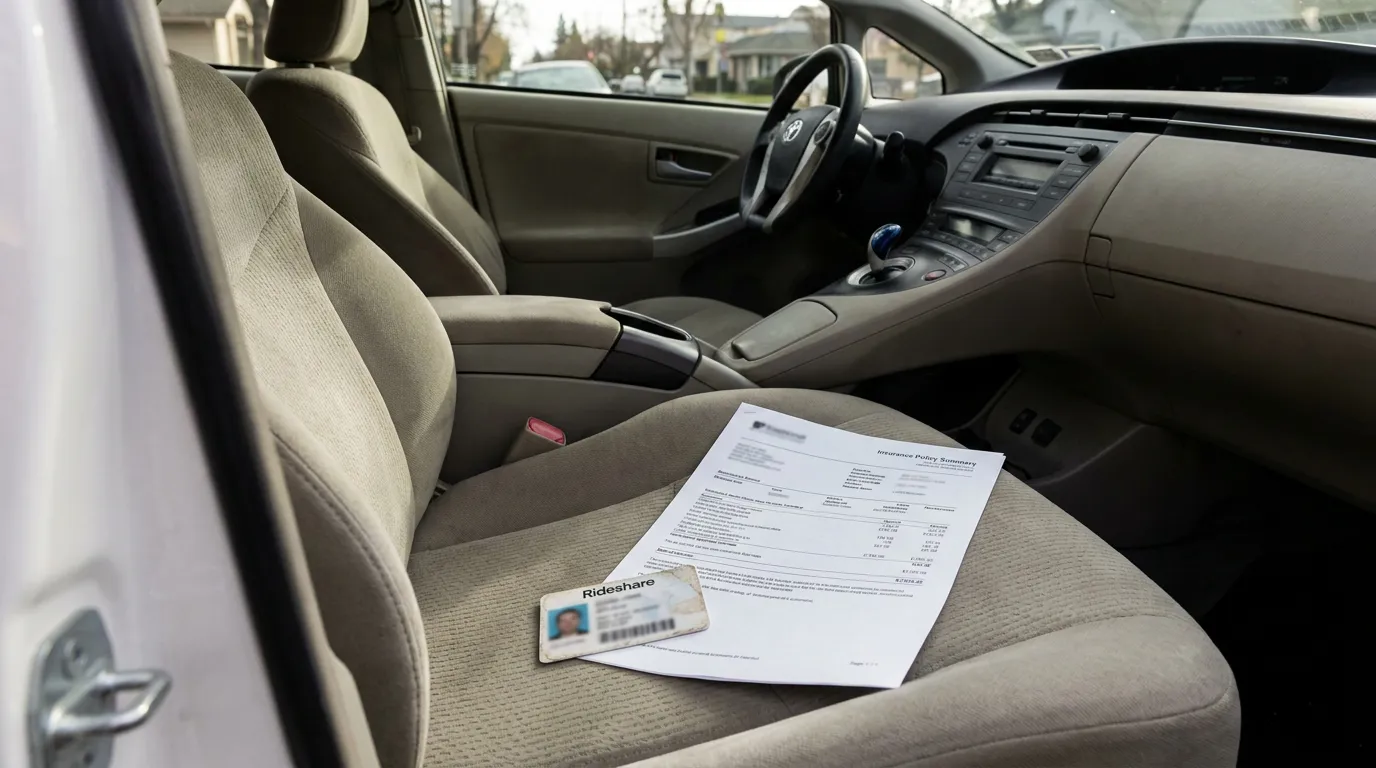
How Rideshare Insurance Coverage Works in California
The amount of insurance available in a rideshare crash turns on what the driver was doing at the moment of impact. California’s transportation network company statutes divide coverage into tiers based on the driver’s app status, and each tier carries different limits. Coverage available when a driver is waiting for a ride is far lower than when a passenger is on board.
Under California’s rideshare insurance requirements, both the company and the participating driver must carry TNC insurance. Cal. Pub. Util. Code § 5433(a) states that a transportation network company and any participating driver shall maintain transportation network company insurance.
The App-On but No Ride Accepted Tier
When a driver is logged into the app but has not yet accepted a passenger, a lower coverage tier applies. Cal. Pub. Util. Code § 5433(c)(1)-(2) requires primary coverage of at least $50,000 per person, $100,000 per incident, and $30,000 for property damage, plus excess coverage of at least $200,000 per occurrence.
The Ride-Accepted and Passenger-Onboard Tier
Once a driver accepts a ride request through the app until the ride is complete, a full $1 million primary liability policy applies. Cal. Pub. Util. Code § 5433(b)(1) provides that TNC insurance shall be primary and in the amount of $1,000,000 for death, personal injury, and property damage from the moment a driver accepts a ride request until completion. This period includes the drive to pick up the passenger. Cal. Pub. Util. Code § 5433(b)(2) also requires uninsured and underinsured motorist coverage of $60,000 per person and $300,000 per incident from the moment a passenger enters the vehicle of a participating driver until the passenger exits the vehicle, which protects occupants when an at-fault third party lacks adequate insurance.
| Driver Status | Primary Liability | Additional Coverage |
|---|---|---|
| App on, no ride accepted | $50k / $100k / $30k | $200k excess |
| Ride accepted to ride complete | $1,000,000 | $60k / $300k UM/UIM |
💡 Pro Tip: Save a screenshot of your ride receipt or trip history right away. It can help establish the driver’s app status at the time of the crash, which directly affects which coverage tier applies.
Who May Be Held Liable in a Sacramento Rideshare Accident
Several parties may share responsibility depending on how the collision unfolded. A negligent rideshare driver is often the starting point, but liability can extend beyond the person behind the wheel.
Potentially liable parties include:
- The rideshare driver, when their negligence caused or contributed to the collision
- The transportation network company, through its required TNC insurance coverage
- A third-party motorist who struck the rideshare vehicle
- Multiple parties at once, when fault is shared
California’s foundational negligence statute supports holding a careless driver accountable. Under Section 1714 of the Civil Code, everyone is responsible not only for the result of their willful acts, but also for injuries caused by a want of ordinary care. Cal. Civ. Code § 1714(a) provides the core legal basis for a rideshare injury claim.
The rideshare company’s exposure is not capped at required insurance minimums. Cal. Pub. Util. Code § 5433(f) states that the article does not limit the liability of a transportation network company arising out of an automobile accident involving a participating driver in any action for damages above the required insurance coverage. This means seriously injured victims may pursue the company for damages exceeding mandated policy limits.
When a non-rideshare, at-fault driver causes the collision, their personal auto policy carries California’s minimum limits. Cal. Veh. Code § 16451(a)(2) provides that for owner’s policies issued or renewed on or after January 1, 2025, minimum coverage rose to $30,000 per person, $60,000 per accident for bodily injury or death, and $15,000 for property damage.
💡 Pro Tip: After a crash, ask the rideshare driver for their insurance information. Cal. Pub. Util. Code § 5442 requires a participating driver to carry proof of TNC insurance at all times and to provide it to other involved parties and to police on request.
Duties Every Driver Owes After a Collision
California imposes an affirmative duty on any driver involved in an injury or fatal crash to stop and remain at the scene. Cal. Veh. Code § 20001(a) requires the driver of a vehicle involved in an accident resulting in injury or death to immediately stop at the scene and fulfill the requirements of Sections 20003 and 20004. These duties include providing a name, address, vehicle registration, and driver’s license, and rendering reasonable assistance to injured persons.
These obligations apply regardless of who caused the accident. A rideshare driver cannot sidestep post-crash duties simply because they believe another motorist was at fault. Cal. Veh. Code § 20001 classifies hit-and-run causing injury or death as a wobbler, and in cases involving death or permanent, serious injury, felony penalties can include up to four years in prison and fines ranging from $1,000 to $10,000.
Proving Negligence and Comparative Fault
Establishing liability in a rideshare crash usually turns on proving negligence. A claimant generally must show duty, breach, causation, and damages. Cal. Veh. Code § 40831 provides that proof of speed in excess of a prima facie limit does not establish negligence as a matter of law; a claimant must prove that operating at that excess speed was actually negligent under the circumstances.
California also applies comparative fault, which can reduce recovery to the extent an injured party contributed to their own harm. Cal. Civ. Code § 1714(a) carves out liability except so far as the injured person has, willfully or by want of ordinary care, brought the injury upon himself or herself. Because fault can be apportioned among multiple parties, documenting the scene thoroughly is valuable. Our guide on how to prove fault after a Sacramento crash explains the process in practical terms.
💡 Pro Tip: Photograph vehicle positions, skid marks, traffic signals, and visible injuries before anything is moved. On busy corridors like Highway 50 or I-80, evidence can disappear quickly once traffic resumes.
Why You Need a Car Accident Lawyer in Sacramento
A rideshare claim can involve multiple insurers, layered coverage tiers, and aggressive adjusters, which is why guidance from a car accident lawyer in Sacramento can be valuable. Dale Gomes brings extensive courtroom experience, including more than 100 jury trials, and is prepared to take a case to trial when an insurance company refuses to offer fair value. That litigation strength matters when serious injuries and long-term disability are on the line.
Timing is critical because California sets firm deadlines for filing suit. A personal injury lawsuit generally must be filed within two years of the injury. Courts interpret exceptions such as tolling or delayed discovery narrowly, and they apply only in limited circumstances. Our firm represents injured clients in Sacramento and nearby communities like Folsom and El Dorado Hills. To learn more, review our work as a dedicated Sacramento car accident attorney.
💡 Pro Tip: Avoid giving a recorded statement to an adjuster before speaking with a Sacramento CA injury lawyer. Early statements can be used to minimize your uber accident liability Sacramento claim.
Frequently Asked Questions
1. Can both the driver and the rideshare company be held liable?
Yes, in many cases both may share responsibility. California requires TNC insurance from both the company and the driver under Cal. Pub. Util. Code § 5433(a), and § 5433(f) confirms the company’s liability is not capped at minimum required limits.
2. What if the rideshare driver had not accepted a ride yet?
A lower coverage tier applies. Cal. Pub. Util. Code § 5433(c)(1)-(2) provides $50,000 per person, $100,000 per incident, and $30,000 in property damage coverage, plus at least $200,000 in excess coverage. Confirming the driver’s app status is essential.
3. How long do I have to file a Sacramento car accident claim?
Personal injury lawsuits in California generally carry a two-year deadline from the date of injury. Exceptions apply in limited circumstances, but courts read them narrowly. Acting promptly helps preserve both evidence and your legal options.
4. Does speeding automatically prove the driver was negligent?
No, speeding alone does not automatically establish negligence. Cal. Veh. Code § 40831 requires proof that driving at the excess speed was actually negligent under the circumstances. This is a fact-dependent question that often benefits from thorough investigation.
5. What happens if I was partly at fault?
Your recovery may be reduced rather than eliminated. California’s comparative fault principle, reflected in Cal. Civ. Code § 1714(a), reduces damages to the extent you contributed to your own harm. An attorney can help you understand how this may affect your claim.
Protecting Your Recovery After a Rideshare Crash
Sorting out liability in an Uber or Lyft collision requires careful examination of the driver’s app status, the conduct of every motorist involved, and the multiple insurance layers California law requires. Liability may reach the driver, the rideshare company, a third-party motorist, or several parties at once, and comparative fault can shape the final result. Because deadlines are strict and evidence fades quickly, injured victims benefit from acting without delay.
If you or a loved one suffered serious injuries in a Lyft accident in Sacramento or any rideshare collision, The Law Offices of Dale R. Gomes is prepared to fight the insurance companies on your behalf. Call 916-706-1351 today or request your consultation online to protect your rights before the statute of limitations runs.