
The California Law That Can Erase Pain and Suffering From Your Crash Case
Key Takeaways: Proposition 213, codified at Civil Code § 3333.4, generally bars uninsured drivers from recovering non-economic damages such as pain, suffering, and disfigurement after a crash, even when another driver was at fault. The bar is triggered by three conditions: a DUI conviction, ownership of an uninsured vehicle involved in the accident, or an injured operator’s inability to establish financial responsibility. Economic damages, medical bills, lost wages, and property damage, generally remain recoverable. A key exception under § 3333.4(c) may preserve pain-and-suffering recovery for an uninsured owner injured by a driver convicted of violating Vehicle Code § 23152 or § 23153. A companion provision, § 3333.3, bars all damages when injuries were in any way proximately caused by a felony, or immediate flight therefrom, for which the plaintiff was convicted. Because coverage status and exceptions are fact-intensive, a Prop 213 defense should be verified rather than accepted.
If you were hurt in a Sacramento collision while driving without insurance, California law may block you from recovering pain-and-suffering money even when the other driver caused the wreck. That is the practical effect of Proposition 213, codified at California Civil Code § 3333.4. The rule does not eliminate your case, but it dramatically reshapes what a jury may award.
If a crash on Highway 50, I-80, or near the Capitol Mall has left you facing surgery, lost income, and an insurance adjuster raising Prop 213, talk with The Law Offices of Dale R. Gomes before you sign anything. Call 916-706-1351 or reach out to our Sacramento team to have your facts reviewed while evidence is fresh.
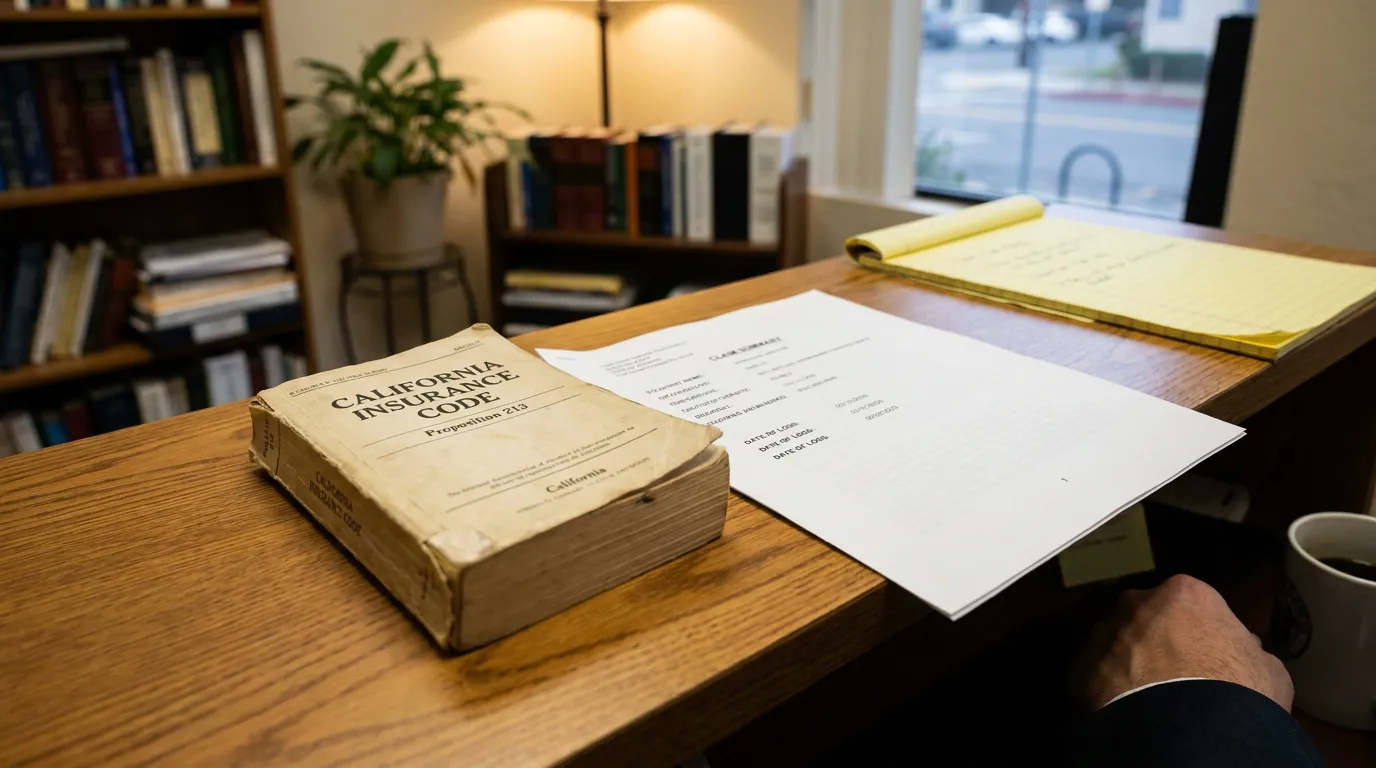
Where Proposition 213 Came From and Why It Still Matters
Proposition 213 was a citizen-initiated statute approved by California voters on November 5, 1996, and it applies statewide, including to Sacramento injury claims. The measure, known as The Personal Responsibility Act of 1996, added Civil Code §§ 3333.3 and 3333.4 and applies to actions in which trial had not commenced before January 1, 1997.
The margin of passage is often cited in case law. The initiative passed with roughly 77% approval, and defense lawyers invoke this when arguing the bar should apply. California courts, however, have not applied the statute without limits: they have declined to extend it beyond the statutory language, such as to injuries not arising from motor vehicle operation.
Understanding the origin matters because Prop 213 is not an insurance company policy or negotiating tactic. It is statutory law, which means fairness arguments alone are unlikely to change the result. What can change the outcome is careful factual analysis of whether the statutory conditions actually apply.
The Core Rule Under Prop 213 Civil Code 3333.4
Civil Code § 3333.4(a) provides that in any action to recover damages arising from motor vehicle operation, a person shall not recover non-economic losses to compensate for pain, suffering, physical impairment, disfigurement, and other nonpecuniary damages if any statutory condition applies. A plaintiff with permanent scarring or spinal injury may lose access to damages that reflect how the crash changed daily life.
The statute lists three triggering conditions; only one needs to apply. You can review the operative text through the official California Civil Code § 3333.4 publication:
- The injured person was operating the vehicle in violation of Vehicle Code § 23152 or § 23153 and was convicted of that offense.
- The injured person owned a vehicle involved in the accident that was not insured as required by California’s financial responsibility laws.
- The injured person was the operator of a vehicle involved and cannot establish financial responsibility as required by state law.
Subdivision (b) addresses the insurer’s side. Under § 3333.4(b), an insurer shall not be liable, directly or indirectly, under a liability or uninsured motorist policy to indemnify for non-economic losses of a person injured as described in subdivision (a). In practice, both the at-fault driver’s liability carrier and a UM carrier may decline to pay pain-and-suffering money to a barred claimant.
💡 Pro Tip: Ownership, not merely driving, may trigger the second condition, and can reach an uninsured owner even when someone else was driving. Whether a vehicle was "owned" by the injured person and whether coverage was in force are fact-intensive questions worth investigating rather than conceding.
What You Can Still Recover as an Uninsured Driver in California
Prop 213 limits non-economic damages only; it does not bar economic damages. Section 3333.4 restricts "non-economic losses to compensate for pain, suffering, inconvenience, physical impairment, disfigurement, and other nonpecuniary damages," leaving economic losses unaffected.
| Damage Category | Generally Recoverable Under Prop 213? |
|---|---|
| Past and future medical bills | Generally yes, subject to proof |
| Lost wages and lost earning capacity | Generally yes, subject to proof |
| Property damage | Generally yes, subject to proof |
| Pain, suffering, and inconvenience | May be barred if § 3333.4(a) applies |
| Disfigurement and physical impairment | May be barred if § 3333.4(a) applies |
Because economic damages may survive, documentation becomes central. Surgical records, future care projections, wage statements, and vocational evidence may carry the weight that pain-and-suffering testimony ordinarily would. Any recovery still depends on proving liability and damages, and may be reduced by comparative fault. Many claimants also want to understand their options for suing an uninsured driver before deciding how to proceed.
The DUI Exception That Can Save Your Pain and Suffering Claim
There is a meaningful carve-out. Under Civil Code § 3333.4(c), where an uninsured owner was injured by a motorist who was operating in violation of Vehicle Code § 23152 or § 23153 and was convicted of that offense, the injured person shall not be barred from recovering non-economic losses. A Sacramento victim struck by a drunk driver may preserve a pain-and-suffering claim despite being uninsured.
Why the Conviction Requirement Controls Timing
The exception turns on an actual conviction, not merely an arrest or pending charge. The criminal case outcome in Sacramento Superior Court may directly affect the value of your civil claim. Because a civil case may resolve before a criminal matter concludes, coordination between the two tracks can matter enormously.
Exceptions Are Narrow and Fact-Dependent
The § 3333.4(c) carve-out is limited, and courts apply it as written. It is tied to an uninsured owner under subdivision (a)(2) and to a convicted DUI motorist, so it does not apply to every intoxicated driver scenario and does not create a general fairness exception.
The Felony Bar Most Drivers Have Never Heard Of
Prop 213 also included Civil Code § 3333.3, which is broader in one respect. That section provides that in any action for damages based on negligence, a person may not recover any damages if the plaintiff’s injuries were in any way proximately caused by the plaintiff’s commission of any felony, or immediate flight therefrom, and the plaintiff has been duly convicted of that felony. The official 1996 ballot measure summary describes this as denying recovery to a convicted felon injured during commission of a felony.
Unlike § 3333.4, the felony bar reaches all damages rather than only non-economic losses, but it applies only to negligence-based actions and requires both proximate causation and actual conviction.
Practical Steps for Sacramento Crash Victims Facing a Prop 213 Defense
First, verify whether the bar actually applies. Coverage may have been in force under a policy you forgot about, a household policy, or a permissive-use arrangement. Passengers, pedestrians, and cyclists who did not own an involved vehicle and were not the operator may generally fall outside subdivisions (a)(1) through (a)(3).
Second, preserve everything that proves economic loss. Emergency records, imaging, physical therapy notes, employer wage documentation, and receipts all build the potentially recoverable side of the ledger.
Third, watch the clock. California’s civil statute of limitations for most personal injury actions is generally two years from the date of injury, and claims against public entities generally require a written government claim within six months of accrual. Tolling and delayed-discovery rules exist but apply only in limited circumstances.
Fourth, get the case in front of someone willing to try it. Insurance carriers may evaluate a Prop 213 case differently when the plaintiff’s lawyer has genuine courtroom credibility. Dale Gomes has tried more than 100 jury trials and is respected for handling serious injury and catastrophic loss cases; if you need a prop 213 civil code 3333.4 lawyer who serves clients throughout the region, including El Dorado Hills and Folsom, that trial experience can become leverage.
💡 Pro Tip: Do not give a recorded statement about vehicle ownership or insurance status before your facts are reviewed. Ownership questions under § 3333.4(a)(2) are often more nuanced than a yes-or-no answer suggests.
Frequently Asked Questions
1. Does Prop 213 apply if I was a passenger and did not own a car?
Generally, no. The bar attaches to an uninsured owner of a vehicle involved in the accident or the injured operator. Passengers who owned no involved vehicle typically fall outside those conditions, but an uninsured owner riding as a passenger in his or her own vehicle can still be barred.
2. Can I still recover medical bills if I was uninsured?
In many cases, yes. Section 3333.4 restricts only non-economic losses, so medical expenses, lost earnings, and property damage may remain recoverable subject to proof and to any defenses, including comparative fault.
3. What if the driver who hit me was drunk?
Civil Code § 3333.4(c) provides an exception for an uninsured owner injured by a motorist who violated Vehicle Code § 23152 or § 23153 and was convicted. If that conviction occurs, the injured person may not be barred from recovering non-economic losses.
4. Does buying insurance after the crash fix the problem?
Generally, no. The statutory condition looks to whether the vehicle was insured at the time of the accident. Later-purchased coverage generally does not retroactively cure the situation.
5. Can Prop 213 affect an uninsured motorist claim on my own policy?
It can. Under § 3333.4(b), an insurer is not liable under a liability or uninsured motorist policy to indemnify non-economic losses of a person injured as described in subdivision (a).
Knowing the Rule Is How You Protect What Remains
Prop 213 is a real limitation, but it is not the end of a Sacramento injury claim. Economic damages may survive, the § 3333.4(c) drunk-driving exception can restore pain-and-suffering recovery in the right circumstances, and the statutory conditions are frequently more debatable than an adjuster admits.
If Prop 213 has been raised against your claim, do not accept a low offer on the assumption that nothing can be done. Contact The Law Offices of Dale R. Gomes at 916-706-1351 or schedule your case review today, because California’s filing deadlines can move quickly and a missed deadline may end the claim entirely.
Disclaimer: This content is for informational purposes only and is not legal advice. Every case is unique, and results may vary. Consult an attorney about your specific circumstances.