
Why Big Rigs Fold on Rain-Slicked Sacramento Highways
Key Takeaways: A truck jackknifes on a wet Sacramento freeway when the tractor’s or trailer’s wheels lose grip and the trailer swings out of line with the cab. Rain is rarely the only cause. Driving too fast for conditions, tailgating, bad or out-of-sync brakes, and poorly secured cargo usually turn a small skid into a multi-lane crash. California laws, including the Basic Speed Law, the 55 mph truck limit, the rule against following too closely, and brake and cargo rules, set standards that can help show whether a crash was preventable. Depending on the facts, the driver, the trucking company, the cargo loader, or a maintenance contractor may share the blame. Injured people generally have two years to sue, but may have only six months to file a claim when a public entity is involved, so save evidence quickly.
A truck usually jackknifes on a wet Sacramento freeway when the tractor’s drive wheels or the trailer’s wheels lose grip, and the trailer swings out of line with the cab. Wet pavement rarely causes the crash on its own. Driving too fast for the rain, following too closely, poorly kept brakes, and loose cargo can turn a light skid into a trailer sliding across several lanes of I-5, I-80, or Highway 50. If you were hurt, each of these causes may point to a driver, trucking company, or loader who could be held responsible under California law.
If a jackknifed big rig hurt you or someone in your family, The Law Offices of Dale R. Gomes can review what happened and explain your options. Visit The Law Offices of Dale R. Gomes, call 916-706-1351, or schedule your free consultation to start protecting your claim.
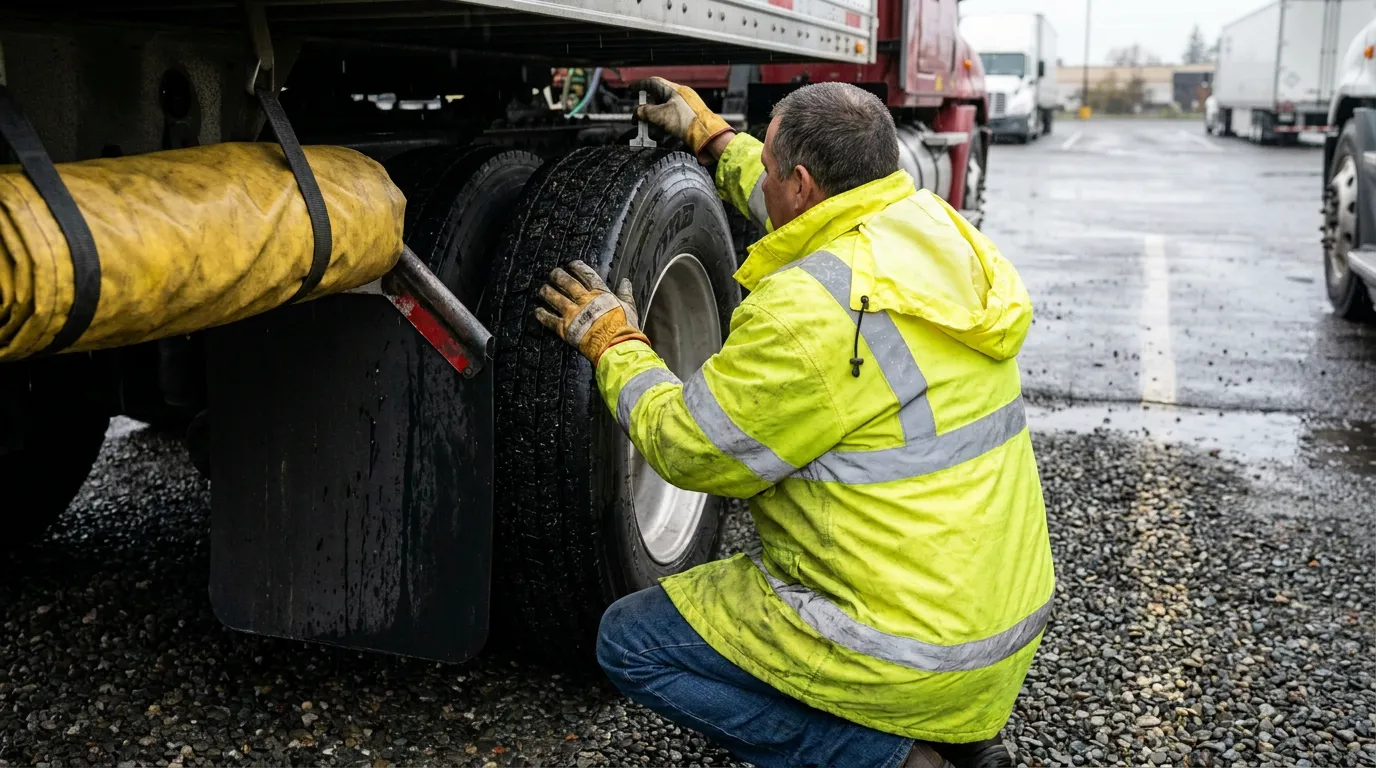
How a Jackknife Happens
A jackknife happens when the trailer stops following the tractor and starts pushing it. The truck folds at the hitch. On dry pavement, tires usually grip well enough to keep the trailer in line. On wet pavement, grip drops, and small mistakes add up fast.
Why Tractor and Trailer Brakes Must Work Together
California law requires the tractor and trailer brakes to work from the same control. Under Cal. Veh. Code § 26458(a), when power brakes are required, the system must generally let one control operate all service brakes on the tractor and every vehicle it tows. If the trailer brakes lag or fail to engage, the trailer’s weight can shove the cab sideways, a common way a jackknife starts.
Why Wet Roads Raise the Risk
Rain reduces grip, which leaves the driver less room for error. Jackknifes are closely tied to loss of grip, which helps explain why they happen more in bad weather. The Federal Motor Carrier Safety Administration (FMCSA) publishes large truck crash data showing whether a jackknife occurred and how severe the crash was.
Common Causes of Jackknifes on Wet Freeways
Most wet-weather jackknifes come down to driver choices, equipment condition, or how the cargo was loaded. Knowing the cause helps decide who may be at fault. Common causes include:
- Driving too fast for conditions: Going the posted limit even when rain makes that speed dangerous.
- Tailgating: Following too closely, which forces hard braking when traffic slows.
- Bad or uneven brakes: Worn, poorly adjusted, or out-of-sync brakes between the tractor and trailer.
- Misused front-brake settings: Using settings meant for poor road conditions the wrong way.
- Shifting cargo: Loose or unbalanced loads that move during braking or lane changes.
Speed and the Basic Speed Law
Driving at the speed limit does not prove a trucker was driving safely. Under Cal. Veh. Code § 22350, no one may drive faster than is reasonable given the weather, visibility, traffic, and road surface and width, or at a speed that puts people or property at risk. This rule is often called the Basic Speed Law. A trucker going 55 mph on a soaked stretch of US-50 near Rancho Cordova may still break the law if that speed was unsafe.
The posted limit gives a driver little cover. Under Cal. Veh. Code § 22351, driving at or below the limit is lawful unless it is shown to break the Basic Speed Law.
Big rigs also face a lower speed limit in California. Cal. Veh. Code § 22406 generally bars trucks or truck tractors with three or more axles, and any vehicle towing another vehicle, from going faster than 55 mph on a highway. A tractor-trailer going over 55 mph before it jackknifed on I-80 near the Capital City Freeway interchange may have broken this rule, and possibly the Basic Speed Law too.
Following Too Closely
Tailgating on wet pavement often leads to the hard braking that causes a jackknife. Cal. Veh. Code § 21703 bars following another vehicle more closely than is reasonable, given speed, traffic, and road conditions. When traffic suddenly backs up near downtown Sacramento, a truck that is too close may lock its wheels and send the trailer swinging out.
💡 Pro Tip: If you remember, write down where traffic slowed and how far the truck was behind other vehicles. These details can later be compared with dashcam video and the truck’s electronic data.
Brake Laws That Can Show a Wet Road Truck Crash Was Preventable
California’s brake rules set clear standards that can help show whether a truck was safe to drive. The table below sums up key rules.
| Law | What It Requires | Why It Matters in a Jackknife |
|---|---|---|
| Cal. Veh. Code § 26311 | Service brakes on all wheels, with limited exceptions; manual front-brake reduction allowed only for poor road conditions | Misused settings can cause skids |
| Cal. Veh. Code § 26454 | Emergency-brake stopping distances that vary by vehicle type | Failing this standard may point to poor upkeep |
| Cal. Veh. Code § 26304 | Power brakes on a trailer or semitrailer must automatically apply if it breaks away from the towing vehicle and hold it stationary for at least 15 minutes, and the towing truck or truck tractor must have service brakes able to stop it if the towed vehicle breaks away | May help prove the tractor and trailer brakes were out of balance |
| Cal. Veh. Code §§ 26502-26508 | Air brake and air tank rules | Uneven air pressure can delay trailer braking |
| 49 C.F.R. §§ 393.40-393.55 | Federal brake system and performance rules | Generally applies to interstate carriers; California adopts many federal standards for in-state carriers |
Brake failures often come from skipped upkeep, not bad luck. Trucking companies must regularly inspect, repair, and maintain their trucks. Learn more about maintenance issues behind truck crashes and how inspection records can become key evidence.
Cargo Loading and Shared Blame
Poorly secured cargo may make a trucking company or loader responsible along with the driver. Cal. Veh. Code § 34500.3 directs the California Highway Patrol to adopt cargo rules that match federal standards in 49 C.F.R. Part 393. A load that shifts during braking on a wet freeway can push the trailer out of line, which may add to the list of parties who could owe you money.
Building a Strong Jackknife Truck Accident Claim
A strong jackknife claim generally depends on saving evidence fast and proving each part of the case. You typically must show that the other party owed you a duty of care, failed to meet it, caused the crash, and that you suffered losses. Trucking companies and their insurers often send investigators to the scene within hours. Electronic logs, engine computer data, and maintenance records can be lost unless someone acts quickly, such as by sending a letter demanding that the company keep them.
Know Your Deadline
California generally gives injured people two years to file a personal injury lawsuit. Code of Civil Procedure § 335.1 sets this deadline. If a government vehicle or a dangerous public road was involved, you generally must file a claim with the public agency within six months under Government Code § 911.2. That claim usually must come before any lawsuit.
Insurers sometimes make quick, low offers before the full extent of an injury is known. Spinal injuries, brain injuries, and long-term disabilities can take months to assess. If you accept an early offer and sign a release, you generally give up the right to seek more money for medical care, lost income, and pain and suffering.
Trial Experience When Insurers Push Back
Trucking insurers may negotiate differently with lawyers they know will go to trial. Dale Gomes has tried more than 100 jury trials and brings that courtroom experience to every serious injury case. A Sacramento truck accident lawyer who is ready to take a case to Sacramento Superior Court may affect how an insurer values the claim. The firm is based in Sacramento and also represents injured clients in El Dorado Hills and Folsom.
Frequently Asked Questions
1. Can the truck driver blame the rain for the jackknife?
Weather alone generally does not excuse a crash. Under Cal. Veh. Code § 22350, drivers must adjust their speed for weather and road conditions. If the trucker failed to slow down, the rain may actually support your claim.
2. Who can be held liable in a jackknife truck accident?
Depending on the facts, the driver, the trucking company, a cargo loader, or a maintenance contractor may be liable. Evidence must support each party’s role.
3. What evidence matters most after a wet road truck crash?
Photos of the scene, witness contact information, medical records, dashcam video, and the truck’s electronic data are often key. Brake inspection and maintenance records can also matter.
4. How long do I have to file a claim in California?
Generally, you have two years under Code of Civil Procedure § 335.1. If a public agency is involved, you generally must file a government claim within six months under Government Code § 911.2.
5. What if the truck was within the 55 mph limit?
Under Cal. Veh. Code § 22351, driving at or below the limit is lawful only if it doesn’t break the Basic Speed Law. Evidence that the speed was unsafe for the conditions can still show the driver was careless.
Turning the Cause Into Accountability
Knowing why a truck jackknifed is often the first step toward holding the right parties responsible. Speeding, tailgating, bad brakes, and shifting cargo are common causes, and each may tie to specific California or federal safety rules. Every case depends on its own facts, so a careful investigation matters.
Don’t let the trucking company’s insurer tell your story. Reach out to The Law Offices of Dale R. Gomes today. Call 916-706-1351 or contact our Sacramento office before California’s filing deadline puts your claim at risk.
Disclaimer: This content is for informational purposes only and is not legal advice. Every case is unique, and results may vary. Consult an attorney about your specific circumstances.