
Linking a Spinal Injury to the Crash That Caused It
Key Takeaways: Proving a Sacramento crash caused your herniated disc generally depends on three things: prompt medical documentation, timely objective imaging such as an MRI, and treating physician testimony addressing causation to a reasonable medical probability, an area governed in part by California Evidence Code § 801.1. Claims rest on the four negligence elements of duty, breach, causation, and damages, with California Civil Code § 1714(a) supplying the baseline duty drivers generally owe. Insurers frequently attack causation by calling the herniation degenerative or age-related, which is why early imaging and consistent treatment matter. A pre-existing degenerative spine does not necessarily disqualify you, because aggravation of an asymptomatic condition may be compensable when before-and-after evidence shows real functional change. California’s pure comparative negligence rule may reduce recovery by your percentage of fault rather than barring it outright. Most personal injury lawsuits generally must be filed within two years under Code of Civil Procedure § 335.1, though different deadlines apply in some situations, so delay can end a claim regardless of its merits.
Proving that a herniated disc came from a Sacramento collision generally requires prompt medical documentation, objective imaging tying the injury to the crash timeline, and qualified medical testimony connecting the two to a reasonable medical probability. Insurance carriers rarely concede this, their standard playbook is to argue a disc bulge or herniation is degenerative, age-related, or predates the impact on Highway 50 or I-80.
The gap between what you feel and what you can prove is where most disc claims are won or lost. If you are dealing with radiating back or neck pain after a collision, The Law Offices of Dale R. Gomes can evaluate how strong your causation evidence actually is. Call 916-706-1351 or schedule a case review now before critical evidence disappears.
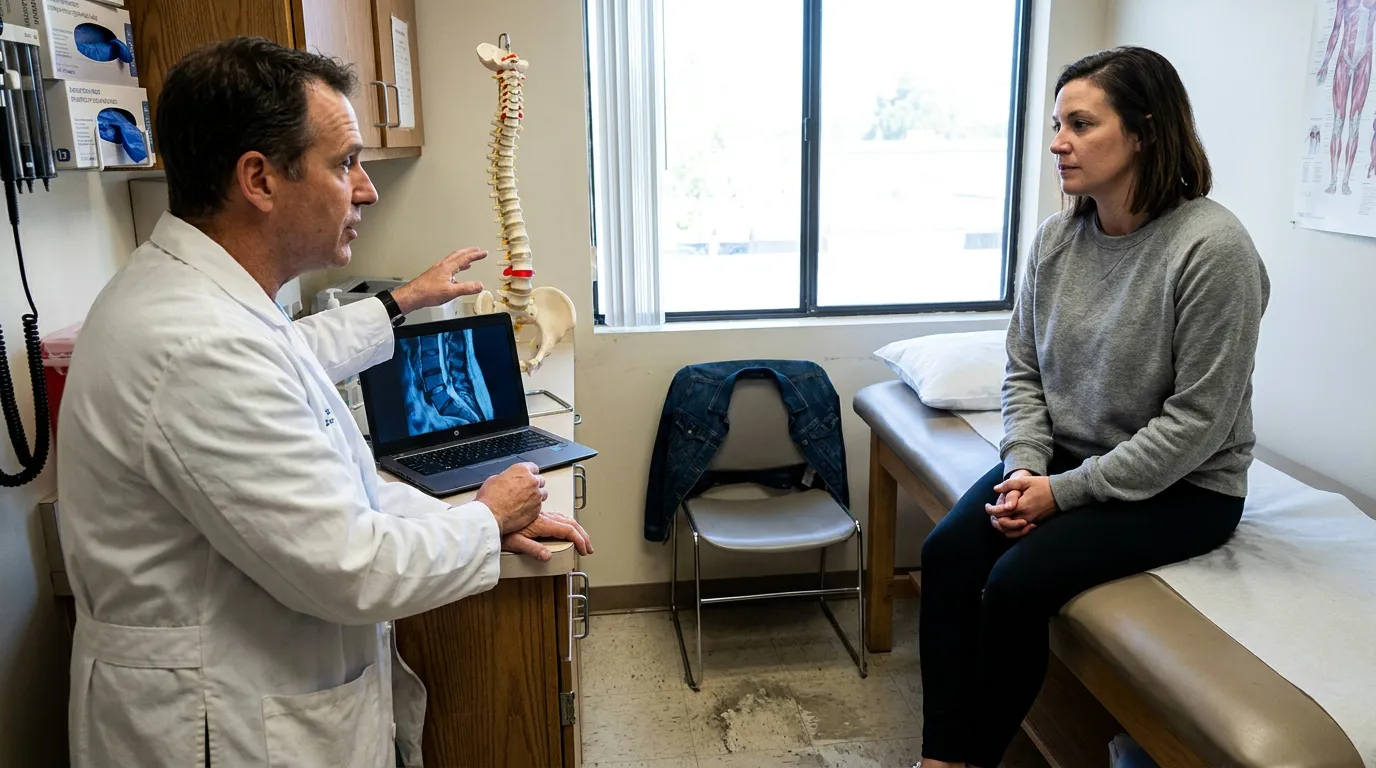
The Legal Foundation: Duty, Breach, Causation, and Damages
California car crash claims generally rest on the same four-part negligence framework. Justia explains that a negligence claim requires showing the defendant owed a duty of care, breached it, that the breach caused the plaintiff’s injuries, and that damages resulted. Duty and breach are often more straightforward when another driver ran a light or rear-ended you, though fault is still contested in many cases. Causation is frequently where the real fight happens.
California Civil Code § 1714(a) supplies the general duty that drivers ordinarily owe. The statute makes everyone responsible "not only for the result of his or her willful acts, but also for an injury occasioned to another by his or her want of ordinary care or skill in the management of his or her property or person," subject to a qualification reducing or barring recovery where the injured person’s own want of ordinary care contributed. This codified general duty of care standard applies statewide, including Sacramento Superior Court, though courts may recognize limited exceptions.
Actual Cause Versus Proximate Cause
Courts generally split causation into two questions. Actual cause, or cause-in-fact, asks whether the defendant’s conduct was a substantial factor in the harm, a test California uses instead of a strict "but for" inquiry when multiple causes are involved. Proximate cause asks whether the harm was a foreseeable result of that conduct. Both typically must be satisfied, and in a disc herniation case actual cause is often harder because the defense will point to your spine’s pre-crash condition.
What California Law Requires from Your Medical Witness
California Evidence Code § 801.1 governs medical causation opinions. Under subdivision (a), where the party bearing the burden of proof offers expert testimony on medical causation requiring an opinion of reasonable medical probability, the opposing party may offer a contrary opinion only if its witness can likewise opine that each alternative cause exists to that same probability. The statute governs admissibility of opposing opinions rather than creating the underlying standard, which comes from case law. The practical takeaway: "possible" is generally not enough. Your physician must generally be prepared to say the collision probably caused the herniation.
Subdivision (b) creates a carve-out that may favor the defense, allowing a defense witness to testify that causation cannot be established to a reasonable degree of probability, along with the basis for that opinion. This is often how insurers attack disc claims, a retained physician reviews your imaging and testifies causation cannot meet that standard, which is why the rules governing expert medical opinion matter so much.
Why Treating Physician Testimony Often Carries Weight
Jurors tend to respond differently to a doctor who actually treated you. Treating physician testimony often comes across as more grounded than that of a retained reviewer who never examined the patient. Your treating orthopedist or neurosurgeon can describe symptom progression, response to conservative care, and clinical findings correlating with imaging, a continuity-of-care narrative that is often the backbone of a credible causation case.
Building the Imaging Evidence for a Disc Injury
Objective imaging is often the anchor of a serious herniation claim. X-rays generally don’t show soft tissue, so an MRI usually reveals a herniation, annular tear, or nerve root compression. Timing matters, an MRI obtained within weeks of the collision is often more persuasive than one obtained months later, since delay may hand the defense an argument that something else intervened.
Common categories of disc herniation evidence include:
- MRI and CT studies showing herniation, extrusion, or nerve impingement
- Emergency department and urgent care records documenting immediate complaints
- EMG or nerve conduction studies confirming radiculopathy
- Physical therapy and chiropractic notes tracking symptom progression
- Vehicle damage photographs and repair estimates showing crash forces
- Prior imaging, when it exists, establishing your pre-crash baseline
💡 Pro Tip: If you had prior back imaging, do not hide it. A comparison study showing a new or worsened finding is often stronger proof than pretending no prior condition existed, and prior records are often discoverable anyway.
How Pre-Existing Conditions Affect a Herniated Disc Car Accident Settlement Sacramento Claim
A degenerative spine does not necessarily disqualify you from recovering. California law generally recognizes that a defendant takes the plaintiff as found, so aggravation of an asymptomatic pre-existing condition may be compensable, though damages are generally limited to the aggravation itself. The evidentiary burden often shifts toward showing functional change, what could you do before the crash that you cannot do now?
Documentation of that before-and-after contrast can be decisive. Employment records, gym memberships, coaching schedules, and coworker testimony may help show a spine that appeared degenerated on film was functioning normally in daily life. Outcomes remain fact-dependent, and no attorney can promise a particular result.
| Evidence Type | What It Tends to Show | Common Defense Response |
|---|---|---|
| Post-crash MRI | Herniation and nerve involvement | Findings are degenerative |
| ER records | Immediate onset of symptoms | Complaints were minor |
| Treating physician opinion | Causation to reasonable medical probability | Witness is an advocate |
| Prior imaging comparison | New or worsened pathology | Change is age-related |
| Lay witness testimony | Functional decline after crash | Testimony is subjective |
Comparative Fault and What It Does to Your Recovery
California generally follows a pure comparative negligence rule adopted in Li v. Yellow Cab Co. A plaintiff’s economic damages may be reduced by their percentage of fault regardless of how large, and multiple defendants are generally severally liable for non-economic damages in proportion to their own fault under Civil Code § 1431.2. Pure comparative systems may allow reduced recovery even where a plaintiff bears majority responsibility.
Expect that an adjuster may raise fault even when liability seems obvious. A defense that cannot beat causation will often pivot to arguing you were speeding, following too closely, or failed to mitigate by skipping physical therapy. Failure to mitigate is a separate doctrine that may limit damages rather than allocate fault, and consistent treatment attendance is one of the simplest ways to protect your claim’s value.
Reporting and Insurance Requirements That Create a Paper Trail
California generally requires drivers to file an SR-1 with the DMV within 10 days when a collision causes injury, death, or property damage over $1,000 to any one person. This reporting obligation, along with the state’s minimum liability insurance requirements, may create documentation corroborating the timing and severity of a crash. These records are administrative and separate from any civil lawsuit, and admissibility of some accident reports is limited by statute, but they can still support the evidentiary timeline. Our team also assists injured people in El Dorado Hills and Folsom who face the same insurer tactics.
Deadlines That Can End a Claim Before It Starts
California generally requires personal injury lawsuits to be filed within two years of the date of injury under Code of Civil Procedure § 335.1. If a lawsuit is not filed within the applicable limitations period, courts will likely dismiss the case regardless of its merits. Limited exceptions and tolling doctrines exist, such as tolling for minors or a defendant’s absence from the state, and the delayed discovery rule may apply in some circumstances, but courts generally interpret these narrowly. Claims against public entities generally follow separate government claim procedures, typically requiring a written claim within six months of the incident. Because deadlines turn on specific facts, confirming yours with an attorney promptly is important.
💡 Pro Tip: Waiting to see if your back "gets better on its own" is one of the most common mistakes in disc cases. Delay may damage both your health and your causation evidence.
Working With a Trial-Tested Sacramento Advocate
Insurance carriers may evaluate cases differently when the file belongs to a lawyer who actually tries cases. Dale R. Gomes has handled more than 100 jury trials and brings that courtroom record to every negotiation with an adjuster. Past results do not guarantee future outcomes, but a carrier weighing a herniated disc car accident settlement Sacramento claim may recognize the difference between a firm that settles everything and one prepared to present imaging evidence disc injury testimony to a Sacramento County jury.
Local knowledge can also matter in how a case is presented. Familiarity with Sacramento Superior Court procedures, regional medical providers, and crash patterns near the Capitol Mall area may allow a case to be framed in terms a local jury understands. You can find additional guidance on Sacramento injury causation issues in our published articles.
Frequently Asked Questions
1. How soon should I get an MRI after a Sacramento crash?
As soon as a physician recommends one. Many providers begin with conservative treatment, but if radiating pain, numbness, or weakness persists, advanced imaging may be warranted. Earlier studies generally produce stronger causation evidence.
2. Can I still recover if my MRI shows degenerative changes?
Potentially yes, depending on the circumstances. Degeneration is common in adults and does not automatically defeat a claim. The question is generally whether the collision caused a new herniation or made a previously asymptomatic condition symptomatic.
3. What does "reasonable medical probability" actually mean?
It is generally understood to mean more likely than not. Under California law, including Evidence Code § 801.1, a causation opinion offered by the party bearing the burden of proof generally must meet this threshold rather than resting on mere possibility.
4. Will my own partial fault prevent me from recovering?
Not necessarily under California’s pure comparative negligence rule. Your award would generally be reduced by your assigned percentage of fault rather than barred outright. The exact percentage is typically a question for the jury or, in a bench trial, the judge.
5. Do I have to give the insurance adjuster a recorded statement?
Generally not to the other driver’s carrier, though your own policy may require cooperation. Recorded statements are frequently used to generate inconsistencies about symptom onset. Speaking with counsel before any such interview is usually advisable.
Protecting Your Claim From Day One
Proving that a Sacramento collision caused your herniated disc generally comes down to disciplined documentation, timely imaging, and medical testimony addressing California’s reasonable medical probability standard. The negligence elements of duty, breach, causation, and damages generally must each be established, and the defense will often concentrate its resources on causation. Consistent treatment, honest disclosure of prior conditions, and early legal involvement may give that link its strength. Results always depend on the specific facts of your case.
Do not let the applicable filing deadline decide your case for you. The Law Offices of Dale R. Gomes offers straightforward assessments of serious spinal injury claims across the Sacramento region. Call 916-706-1351, visit our personal injury firm, or request your consultation today to start building your herniated disc car accident settlement Sacramento claim while the evidence is still fresh.
Disclaimer: This content is for informational purposes only and is not legal advice. Every case is unique, and results may vary. Consult an attorney about your specific circumstances.