
A January 1, 2026 change in California DUI law quietly made ignition interlock rules more important, not less. AB 366 extended California’s statewide ignition interlock device (IID) framework through January 1, 2033. For people in Sacramento, CA facing DUI charges, an IID issue is no longer just a licensing inconvenience, it can affect plea strategy, restricted-license eligibility, and even create a new criminal charge if a person drives around the restriction or tampers with the device. DMV highlights new laws in 2026
Why California’s IID Extension Matters to DUI Defense Cases
California’s IID law has been statewide since January 1, 2019, but AB 366 changed the timeline to keep the system alive for years longer. Section 23575 contained a sunset clause set for January 1, 2026. AB 366 pushed that repeal date to January 1, 2033, preserving the existing statewide program. California AB 366
The real issue is how IID requirements interact with restricted driving privileges, suspended-license allegations, compliance costs, and later violations. Under Vehicle Code section 23575, courts must require IID installation for convictions of driving on a DUI-suspended license under section 14601.2, with court-set restrictions lasting up to three years. The statute also requires servicing at least every 60 days. For a reader searching for a Sacramento criminal defense lawyer, this detail often becomes central after arrest but before sentencing.
What AB 366 did, and did not do
AB 366 did not create the broader first-offender expansion that some earlier versions suggested. Stronger provisions making interlock requirements mandatory for first offenders were removed in committee, and the enacted bill primarily extended the existing program through 2033. Many people hear "new DUI law" and assume every first-time case now requires an IID. The law is more specific.
However, first-offense defendants should not assume an IID is off the table. Section 23575 still allows courts to require a certified IID for a first offense under Vehicle Code sections 23152 or 23153, with heightened consideration where blood alcohol concentration is 0.15% or higher. Outcomes depend on the record, the charge, the local court, and the facts of the stop and arrest.
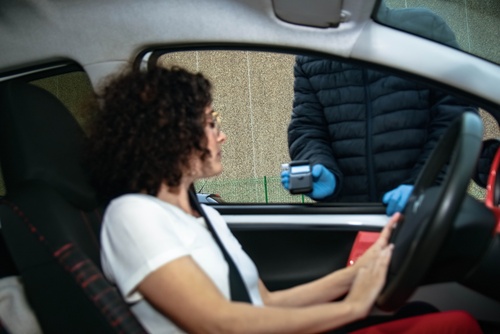
A Sacramento Scenario: One DUI, Then a Second Problem
Imagine a Sacramento driver arrested for DUI, later obtaining restricted driving privileges tied to an IID. He borrows a family member’s car without a certified IID installed, thinking the restriction only applies to vehicles he owns. That assumption can create a second legal problem.
Under California law, "operates" is not limited to cars a person owns. Section 23575 applies to vehicles the person operates. The statute also excludes motorcycles from the definition of "vehicle" for IID installation purposes until the state certifies a motorcycle IID, and separately prohibits any person subject to an IID restriction from operating a motorcycle for the duration of the restriction period. A restricted driver cannot safely treat a friend’s car, spouse’s car, or work vehicle as a workaround.
The consequences escalate fast. Under Vehicle Code section 23247, tampering with, bypassing, or removing an IID, asking another person to blow into it, or driving a non-IID vehicle while under an applicable restriction is unlawful. A violation can carry up to six months in county jail, a fine of up to $5,000, or both. If convicted of operating a non-IID vehicle while under a section 13352 IID restriction, DMV must terminate the restriction and reinstate the original suspension or revocation. What looks like a shortcut can erase the driving privilege the person had regained.
Compliance Issues That Can Change the Direction of a DUI Case
Certified devices matter more than many defendants realize
Not every ignition interlock device satisfies California law. Under Vehicle Code section 13386, DMV must certify IID devices and publish an approved list. A defendant ordered to install an IID should verify the installer and model are DMV-approved. The California DMV’s approved IID list is the practical starting point.
DMV has continuing authority to suspend or revoke a device’s certification if it no longer meets standards. This creates a compliance concern that may not be the defendant’s fault but can still affect their legal position if not addressed quickly.
The license restriction is not just paperwork
When DMV issues an IID-based restricted license, the restriction goes on the driver’s record. That notation means law enforcement can see the person is limited to driving vehicles equipped with a functioning, certified IID.
That visibility changes how routine traffic stops play out. A stop for speeding or an equipment issue can quickly turn into an allegation that the driver violated IID restrictions. For someone protecting employment, immigration status, custody arrangements, or a professional license, avoiding secondary violations can be almost as important as defending the underlying DUI charge. Readers who want a broader overview of California ignition interlock requirements often discover the hardest part is not getting the device installed once, but staying compliant over time.
What Defense Lawyers Look At When IID Issues Appear in a DUI Case
An IID allegation should not be treated as automatic proof that the prosecution or DMV will prevail. The first questions usually involve the stop, the arrest, the charging decision, and the proof. Was there lawful probable cause? Was there an unlawful search or seizure? Were statements obtained in a way that raises Miranda issues? Did the government accurately identify who was driving and what restriction applied?
Defense analysis must be broader than the main criminal count. A person may be weighing whether to accept a plea without fully understanding how an IID term or suspended-license allegation could affect work transportation, child exchanges, commercial driving, or immigration screening.
The most important practical steps are simple but urgent:
- Confirm the exact court order and DMV restriction dates
- Verify the device is on DMV’s approved list
- Keep proof of installation, calibration, and service appointments
- Do not drive any non-IID vehicle if the restriction applies
- Do not let anyone else provide a breath sample for you
- Get legal advice quickly if police or DMV allege a violation
Those steps can prevent a bad situation from becoming worse and create a paper trail that may matter later if the facts are disputed.
Why This Development Matters in Sacramento Specifically
Sacramento drivers often face the full weight of both court and DMV systems at once. The extension of California’s IID framework through 2033 means these issues are not temporary or transitional. They remain part of the legal landscape now. DMV highlights new laws in 2026
This affects the leverage points in plea negotiations, the risks of a suspended-license case, and the consequences of any later misstep with a restricted license. For many defendants, the practical question is no longer just, "Will I lose my license?" It is, "What restrictions will follow me, for how long, and what happens if I make one mistake?"
A quick national context
California is not alone in using ignition interlock laws, but each state structures them differently. States vary significantly in when interlocks are mandatory, how long they last, and how they interact with licensing relief. Online advice from another state can be dangerously misleading for a Sacramento case. See the state ignition interlock laws survey for broader comparison. California AB 366
How Does This Impact Me?
What does this law change for my current DUI case?
If your case involves possible IID conditions, the biggest change is that California’s existing framework did not expire on January 1, 2026. It now continues through January 1, 2033 under AB 366. Whether it changes your individual case depends on the charge, your prior record, the sentence being considered, and the exact restriction that may apply. DMV highlights new laws in 2026
Can I drive someone else’s car if I have an IID restriction?
Usually, that is a dangerous assumption. The statute focuses on vehicles you operate, not only vehicles you own. Driving a non-IID vehicle while under a qualifying restriction can trigger new misdemeanor exposure and DMV consequences. If your license shows an IID-only restriction, get clear legal guidance before driving any vehicle that is not properly equipped.
What if my IID malfunctions or my device later loses certification?
A device problem does not automatically mean you intended to violate the law, but you should not ignore it. Save service records, contact the provider immediately, and speak with counsel if police, probation, the court, or DMV claim you were out of compliance.
Does this mean every first-time DUI offender must install an IID?
No, not in every case. The enacted version of AB 366 mainly extended the existing program through 2033. Section 23575 says courts may require an IID for certain first-offense DUI convictions rather than making it automatic in every first-offender case.
What should I do next if I was arrested or I am already on an IID restriction?
Start by getting the exact paperwork, your citation or complaint, the court order, and your DMV notice or license restriction information. Then have a lawyer review the stop, the evidence, the possible defenses, and the collateral consequences before you make avoidable mistakes. This article is general information, not individualized legal advice.
What This Means Going Forward for Sacramento DUI Defendants
California’s IID system did not sunset in 2026, and that extension has real consequences for people facing DUI allegations in Sacramento. AB 366 keeps the existing structure in place through January 1, 2033, while section 23247 adds serious risk for people who try to bypass the system. For defendants, the legal issue is how that order interacts with driving privileges, future exposure, and long-term collateral consequences.
That makes early, defense-focused analysis especially important. A criminal defense lawyer in sacramento California should be looking at constitutional issues, evidentiary weaknesses, negotiation strategy, and the DMV side of the case together. The right response depends on the facts, and understanding the updated law can help you avoid preventable mistakes while your case is still developing.
If you want to understand how this news may affect your DUI case or restricted-license options, The Law Offices of Dale R. Gomes is available as a resource. You can call 916-706-1351 or contact us today to ask for more information about the criminal process, possible defenses, and the practical consequences of IID-related allegations in Sacramento and El Dorado County.