
What Sacramento Drivers Should Know When Red Lights Appear in the Mirror
Key Takeaways: A traffic stop in Sacramento is a Fourth Amendment seizure requiring reasonable suspicion of a violation, subject to narrow exceptions like DUI checkpoints. A lawful stop becomes unlawful if extended beyond the time needed to complete the citation and license checks. You are not required to consent to a vehicle search, and refusal cannot be used as evidence of guilt. Lange v. California holds that pursuit of a fleeing misdemeanor suspect does not categorically justify warrantless home entry, and Brendlin v. California gives passengers standing to challenge stops. When limits are crossed, a Penal Code 1538.5 motion to suppress seeks exclusion of evidence, though courts recognize exceptions like good faith and inevitable discovery. Outcomes depend on specific facts and early record development, making prompt consultation with defense counsel critical.
A traffic stop on Highway 50, I-80, or a surface street near Capitol Mall is a Fourth Amendment seizure, meaning officers need reasonable suspicion before pulling you over, and any search must rest on consent, probable cause, or a recognized exception. California procedure provides a remedy: a penal code 1538.5 motion to suppress asks courts to exclude evidence from unlawful stops or searches.
If you were arrested after a questionable stop, the window to build a suppression record starts immediately. The Law Offices of Dale R. Gomes brings more than 100 jury trials of courtroom experience to challenging prosecutors in Sacramento Superior Court, and the firm does not treat trial as a last resort. Call 916-706-1351 or schedule a case review now to discuss what happened on the roadside.
Why Reasonable Suspicion Controls the First Sixty Seconds
The lawfulness of everything that follows depends on whether the officer had a valid reason to initiate the stop. Officers must articulate specific facts supporting reasonable suspicion of a violation, not a hunch. Courts have held that an officer’s objectively reasonable mistake of fact, and in some circumstances a mistake of law, does not automatically invalidate a stop. A stop beginning without proper foundation may be unlawful detention, and courts may treat subsequent evidence as tainted unless the prosecution shows dissipation or inevitable discovery.
Courts also examine whether the stated reason matches the officer’s actual conduct. Body camera footage, dispatch logs, and written reports frequently contradict the justification offered in court. Defense counsel reviewing these materials may find that the asserted equipment violation or lane deviation lacks record support. The validity test is objective, so an officer’s subjective motive generally isn’t grounds for suppression; discrepancies matter because they undercut credibility of claimed observations.
How Long Is Too Long? Prolonged Detention After the Purpose Is Complete
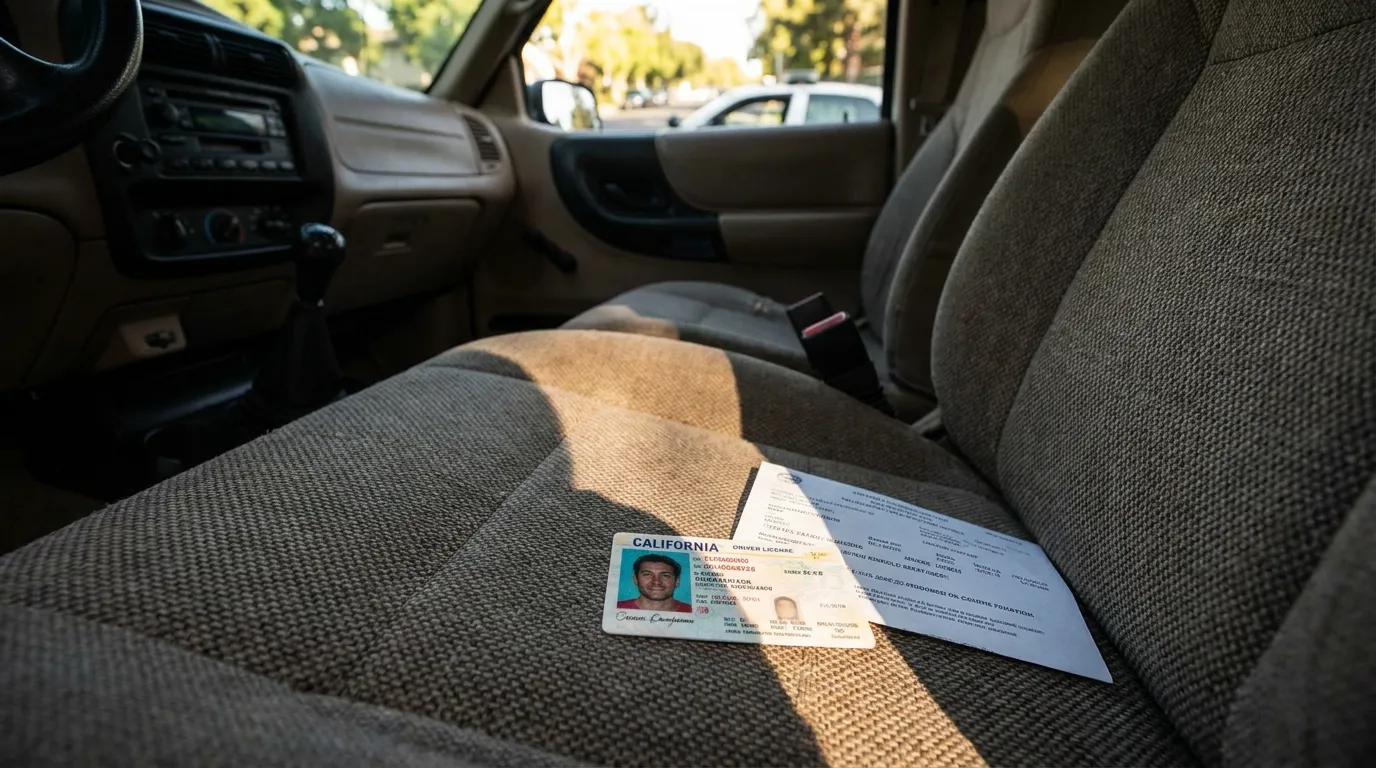
A lawful stop becomes unlawful if officers extend it beyond the time reasonably needed to address the original purpose. Writing a citation, checking a license, confirming registration, and running officer-safety checks define the stop’s mission. Once those tasks are finished, continued detention for a dog sniff, additional questioning, or records checks requires independent reasonable suspicion or consent.
Prolonged traffic stop California claims often turn on minutes, not hours. Timestamps on recordings help establish when the citation was completed and when questioning shifted. Courts ask whether the stop was measurably extended, not whether the officer was efficient. If your encounter dragged on without justification, consult a lawyer before your first court date.
\u{1F4A1} Pro Tip: Write down your timeline immediately, including when lights activated, when you handed over documents, and when the officer returned to the patrol car. Memory fades fast, and that timeline can anchor a later challenge.
Consent to Search Your Vehicle Is a Choice, Not an Obligation
You are not required to consent to a search of your car during a traffic stop, and refusal cannot be treated as evidence of guilt. Under California’s stop data reporting law, Government Code § 12525.5, covered agencies must document whether consent to search was requested and provided, and the basis for any search.
The prosecution generally bears the burden of justifying a warrantless search. If the officer claims consent, defense can test whether it was voluntary rather than coerced. If the officer claims probable cause, the stated basis becomes the battleground. Officers don’t always need consent: probable cause under the automobile exception, lawful inventory, search incident to arrest, or protective frisk can each supply independent basis.
Practical Ways to Protect Your Roadside Search Rights
- State clearly and calmly that you do not consent to a search, then stop talking.
- Keep your hands visible and comply with lawful commands even while declining consent.
- Do not physically resist a search you believe is unlawful; the remedy is in court.
- Ask whether you are free to leave, and note the answer.
What Lange v. California Means for Drivers Who Keep Driving Home
The Supreme Court held that fleeing a traffic stop on a suspected misdemeanor does not categorically permit warrantless home entry. In No. 20, 18, Arthur Gregory Lange v. California, decided June 23, 2021, the Court explained that "Under the Fourth Amendment, the pursuit of a fleeing misdemeanor suspect does not always justify a warrantless entry into a home." The Court vacated the state judgment and remanded for case-specific exigency analysis.
The facts are strikingly ordinary. Lange drove past a California highway patrol officer playing loud music and honking; the officer followed with lights activated, but Lange drove to his driveway and into his garage. The officer entered without a warrant, questioned Lange, and conducted field sobriety tests. Charged with misdemeanor DUI, Lange moved to suppress, California courts rejected his Fourth Amendment arguments, and the Supreme Court vacated.
The Exigency Exception Still Applies Case by Case
Lange did not create a blanket rule barring entry. The Court preserved case-by-case exigency inquiry. An officer may make warrantless entry when pursuing a fleeing misdemeanant if an exigent circumstance exists, such as risk of escape, destruction of evidence, or harm to others. Whether such exigency existed is fact-dependent, which is why detailed factual development matters in DUI cases where warrantless entry preceded sobriety testing.
Passengers Have Standing Too
A passenger is generally seized when the car is pulled over and may challenge the stop’s legality. In Brendlin v. California, 551 U.S. 249 (2007), the Court held that automobile passengers are "seized" within the meaning of the Fourth Amendment when the car is held at a traffic stop, not just the driver. That standing extends to challenging the stop itself; a passenger ordinarily has no independent expectation of privacy in another person’s vehicle, so ability to contest a vehicle search is more limited.
The test is objective. The Court asked whether a reasonable person in the passenger’s position would have felt free to terminate the encounter with police, establishing that passengers are seized for Fourth Amendment purposes from the moment the car is stopped. After arresting Brendlin as a parole violator, officers searched him, the driver, and the car, finding methamphetamine paraphernalia; he moved to suppress, and the California Court of Appeal held he was seized by the unlawful stop. The California Supreme Court then reversed, but the U.S. Supreme Court vacated the California Supreme Court’s judgment and remanded, holding unanimously that passengers are seized within the meaning of the Fourth Amendment during a traffic stop, a reminder that a flawed assumption about paperwork may create a viable challenge without guaranteeing dismissal.
Filing a Penal Code 1538.5 Motion to Suppress in Sacramento
Secondary legal sources describe Penal Code 1538.5 as the statute authorizing a defendant to move to exclude evidence obtained through unreasonable search or seizure. This is the procedural vehicle used to challenge traffic stop evidence in California criminal court. A well-supported motion may reach breath and blood results, contraband, and statements following unlawful conduct, though courts may admit evidence where exceptions such as good faith, independent source, inevitable discovery, or attenuation apply.
| Issue Raised | Typical Evidence Reviewed | Possible Effect if Granted |
|---|---|---|
| No reasonable suspicion for the stop | Dispatch audio, dash camera, citation | Possible suppression of later-obtained evidence |
| Detention prolonged past the mission | Timestamped video, report narrative | Possible suppression of evidence found after delay |
| Invalid or coerced consent | Body camera, stop data reporting | Possible suppression of items from the vehicle search |
| Warrantless entry or unjustified search | Officer report, scene photographs | Possible suppression of DUI testing and statements |
Deadlines and Procedural Timing
Suppression practice is governed by criminal procedural deadlines. Generally, misdemeanor suppression motions are litigated before trial with statutory notice, while felony motions are typically raised at preliminary hearing or by subsequent motion in superior court. Failing to raise the issue at the proper stage can forfeit it. Because timing rules vary by charge level and procedural posture, early consultation with a Sacramento criminal defense lawyer can be the difference between a preserved issue and a waived one. The firm also serves clients in El Dorado Hills and Folsom.
Frequently Asked Questions
1. Can police search my car simply because they smell something?
Not automatically. Officers must articulate a recognized legal basis, and whether a particular odor supports probable cause is fact-dependent and frequently litigated, particularly for cannabis where lawful possession limits complicate analysis.
2. Does refusing consent give police a reason to search anyway?
No. Refusal is a constitutional right and, standing alone, does not supply reasonable suspicion or probable cause, although officers may search if an independent legal basis exists.
3. What happens if the judge grants my suppression motion?
If key evidence is excluded, the prosecution may lack proof to proceed, leading to reduced charges or dismissal. A granted motion is not automatically a dismissal. Results depend on facts and remaining evidence.
4. I was only a passenger. Can I challenge the stop?
Yes, in many cases. Under Brendlin, passengers are generally seized at the moment of the stop and may have standing to contest its lawfulness, though standing to challenge a vehicle search is narrower.
5. Should I talk to the officer to explain my side?
You may decline to answer questions beyond identifying information, though California law requires drivers to present license, registration, and proof of insurance. Roadside statements are routinely used by prosecutors; speak with counsel first.
Protecting the Record Before It Hardens Against You
Your Fourth Amendment protections do not evaporate when you pull to the shoulder. Reasonable suspicion must justify the stop, detention must stay within its original mission, and search generally requires valid consent, probable cause, or a provable exception. Where those limits were crossed, California procedure provides a path to challenge traffic stop evidence.
Do not assume the officer’s version of events is the final word. The Law Offices of Dale R. Gomes takes cases to trial when prosecutors will not offer a fair resolution. Call 916-706-1351, visit the firm’s criminal defense practice, or request a confidential consultation today.
Disclaimer: This content is for informational purposes only and is not legal advice. Every case is unique, and results may vary. Consult an attorney about your specific circumstances.