
When Inadequate Security Turns a Property Owner Into a Defendant
Key Takeaways: A negligent security claim is a California premises liability action that may hold a property owner responsible when inadequate security allows a reasonably foreseeable third-party crime to injure someone. Success generally requires proving duty, breach, causation, and damages. Foreseeability is often decisive, and California courts generally require a heightened showing, frequently prior similar incidents at the specific location, before imposing burdensome security obligations such as hiring guards. Liability may reach landlords, management companies, commercial tenants, hotel and bar operators, parking garage operators, and contracted security firms, depending on who controlled the area and security decisions. Claims against government entities follow a separate track under the Government Claims Act, with a six-month presentation deadline for personal injury claims, while most private claims fall under the two-year statute of limitations. Because surveillance footage is often overwritten and deadlines pass quietly, early investigation and evidence preservation can significantly affect a case’s value.
A negligent security claim is a premises liability action brought when a person is injured by a third party’s criminal conduct on property the owner allegedly failed to secure against foreseeable danger. In Sacramento, that might mean an assault in a poorly lit parking structure near Capitol Mall, a robbery at an apartment complex with broken gate locks, or a violent attack at a commercial property where prior incidents were ignored. The claim doesn’t punish the owner for the crime itself, it asks whether the owner’s failure to take reasonable security measures helped make the harm possible.
If you or your child suffered serious injuries because a property owner ignored obvious security risks, The Law Offices of Dale R. Gomes is ready to evaluate your situation. Call 916-706-1351 or schedule your free consultation today before critical evidence such as surveillance footage disappears.
The Four Elements Behind Negligent Security Injury Claims California Courts Recognize
Every negligent security case rests on the same four-part negligence framework used across California tort law. A plaintiff must generally prove a legal duty owed by the defendant, breach of that duty, causation linking the breach to an injury, and actual damages. Whether a duty exists is usually decided by the court, while breach and causation are typically jury questions.
The standard of care is what a reasonably prudent person would have done under similar circumstances. A property owner is generally not required to guarantee anyone’s safety or turn a shopping center into a fortress. Courts weigh the foreseeability of the harm against the burden of the precaution the plaintiff claims was required, the more burdensome the measure, the higher the degree of foreseeability courts typically demand.
How Breach Looks in Real Sacramento Cases
Breach in a security case often means an owner ignored a known, fixable vulnerability. Common examples in Sacramento County litigation include:
- Burned-out or missing lighting in parking lots, stairwells, and walkways
- Broken gates, propped exterior doors, or defective locks in apartment complexes
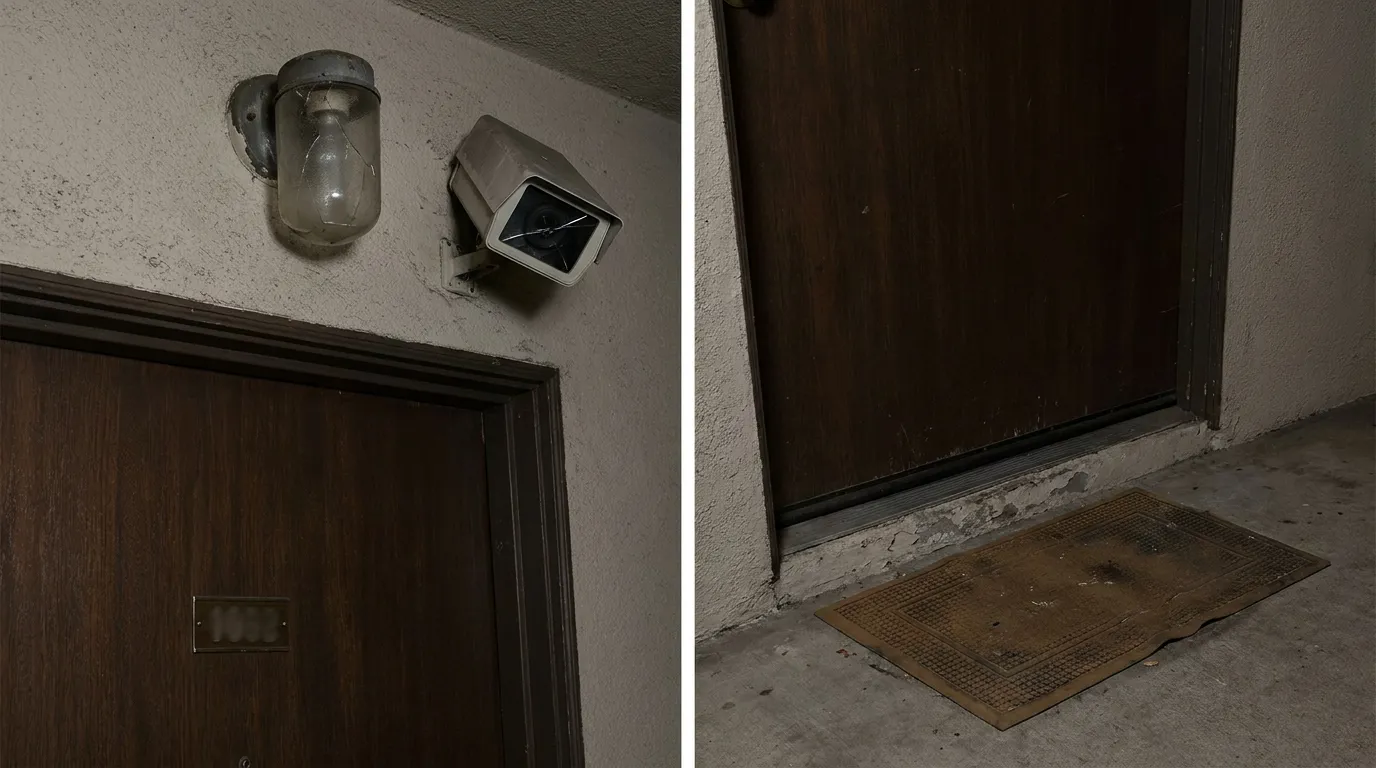
- Security cameras that were decorative, unplugged, or never monitored
- Guard services promised in leases or advertising but quietly reduced
- No response to a documented pattern of prior assaults, thefts, or trespassing on site
Each fact must still be tied to the specific injury. Proving a dark parking lot existed isn’t likely enough on its own, the evidence generally must support a reasonable inference that adequate lighting or another measure would have been a substantial factor in preventing or reducing the harm.
Foreseeability: The Battleground in Most Premises Liability Security Cases
Foreseeability often decides more negligent security cases than any other issue. California courts have generally held that a landlord’s awareness that crime occurs generally in the surrounding area does not, by itself, create a duty to install costly security measures such as guards. The analysis looks closely at what this defendant knew about this property and what burden the proposed precaution would have imposed. Less burdensome measures, replacing a broken lock, repairing lighting, have sometimes been required on a lesser showing of foreseeability.
The California Supreme Court’s decision in Zelig v. County of Los Angeles illustrates how demanding that analysis can be. In Zelig v. County of Los Angeles, plaintiffs alleged the county failed to provide adequate security after a woman was fatally shot by her former husband in a courthouse. The Court applied the general principle that there is ordinarily no duty to protect others from third-party conduct absent a special relationship, and addressed statutory limits on public entity liability. Because the defendant was a public entity, the case isn’t a direct template for claims against private owners, but its duty analysis is frequently cited.
That doesn’t mean security claims fail as a rule, it means the evidence has to be specific. Scholarly analysis of California premises liability doctrine published in the San Diego Law Review traces how the duty owed by landowners may turn on the relationship between the parties, the foreseeability of the harm, and the burden of the precaution claimed to be required. Prior similar incidents at or near the property are often among the most persuasive proof available, though California courts have also recognized that an imminent, ongoing danger unfolding in front of employees can trigger a duty of reasonable response even without a history of similar crimes.
Why Local Crime Data Matters but Rarely Stands Alone
Regional crime statistics can support a foreseeability argument, though they seldom carry a case alone. California crime data varies considerably by county, city, and year, and public perception often diverges from official reporting. Records of police calls to the specific address, internal incident reports, tenant complaints, and prior civil claims typically carry more weight than citywide figures.
💡 Pro Tip: Request the property’s prior incident history early. A public records request for police calls for service at a specific Sacramento address can reveal a pattern the owner may later claim never existed.
Who Can Be Held Responsible Under California Premises Law
Liability may extend beyond the person holding title to the land. Depending on the facts, responsibility may fall on shopping center owners, apartment landlords and property management companies, hotel and bar operators, parking garage operators, commercial tenants controlling their own premises, and contracted security firms. The controlling question is generally who exercised control over the area and the security decisions at issue, since the duty to maintain safe premises generally follows possession and control rather than title alone.
Multiple defendants are common, and that can often work in an injured person’s favor. A management company may point at the security vendor while the vendor points back. Sorting that out often requires early investigation, preservation letters, and sometimes litigation rather than a polite claim letter to an insurer. California’s rules generally make defendants jointly liable for economic damages while apportioning non-economic damages by each defendant’s share of fault.
| Type of Property | Typical Security Issues at Stake |
|---|---|
| Apartment complexes | Broken gates, failed locks, unlit common areas |
| Retail and shopping centers | Parking lot lighting, guard coverage, camera monitoring |
| Bars and nightclubs | Untrained staff, crowd control failures, failure to intervene (note: California statutes generally immunize alcohol providers for injuries caused by intoxicated patrons, with narrow exceptions) |
| Parking structures | Access control, sightlines, emergency call stations |
| Public buildings | Statutory immunities and special duty questions |
Claims Against Government Entities Follow a Separate Track
When the property is owned by a public entity, deadlines are often significantly shorter. Claims against governmental defendants are generally governed by the California Government Claims Act, which requires a written claim for personal injury to be presented within six months of accrual under Government Code § 911.2 before a lawsuit may be filed. Public entity liability for dangerous conditions of public property is separately governed by Government Code §§ 830 and 835, and various statutory immunities may apply. Notably, a public entity is generally not liable for failing to provide police protection, which can limit many security-based theories.
This administrative claims process is generally distinct from a civil lawsuit. Presenting a government claim does not start your court case, and a formal written rejection typically triggers a six-month window to file suit, substantially shorter than the usual two-year period. If your injury occurred at a school, transit facility, or other government-owned site, the timeline is typically unforgiving and warrants immediate attention.
Deadlines That Can End a Case Before It Starts
California generally allows two years from the date of injury to file a personal injury lawsuit. That period, set by Code of Civil Procedure § 335.1, generally applies to most negligent security claims against private property owners. The California courts’ guidance on statute of limitations deadlines explains that a court will likely refuse to hear a case filed after the applicable period expires.
Exceptions exist, but courts often interpret them narrowly. Tolling for minors, delayed discovery, or a defendant’s absence from the state may apply in limited circumstances, and none should be assumed to apply to your situation. Certain claims, such as those arising from childhood sexual assault, are governed by separate and longer statutes. Treating the two-year period as firm, and government claims as six-month matters, is generally the safer approach.
💡 Pro Tip: Surveillance systems in many commercial buildings may overwrite footage within days or weeks. A prompt written preservation demand from counsel can be the difference between proof and speculation.
Evidence Worth Securing Immediately
The strongest security cases are often built in the first weeks, not the first year. Photograph lighting conditions at the same time of night the attack occurred, obtain the police report number, identify witnesses and employees on duty, and keep every medical record tied to your treatment. Readers wanting broader background on premises liability in California will find similar evidentiary principles generally apply across property injury claims.
How a Sacramento Trial Attorney Approaches Security Negligence
Insurance carriers defending these claims may be less likely to offer meaningful value until they believe trial is real. Dale R. Gomes has tried more than 100 jury trials, and that courtroom record shapes how these cases are litigated from day one. The firm represents injured people in Sacramento and also serves clients in El Dorado Hills and Folsom, filing in Sacramento Superior Court when negotiation fails to reflect the true scope of a client’s injuries. No result in a prior case guarantees a similar outcome in yours.
Serious harm deserves serious preparation. Traumatic brain injuries, fractures, spinal damage, and long-term disability arising from a third-party assault generally call for documented economic losses and credible testimony about pain and suffering. Anyone weighing a negligent security injury claims California lawyer consultation should expect a candid assessment of both the strengths and genuine weaknesses of a foreseeability argument.
Frequently Asked Questions
1. Do I still have a claim if the attacker was never caught?
Potentially. A civil claim is generally separate from any criminal prosecution and focuses on the owner’s alleged inadequate security rather than the assailant’s identity. An unsolved crime can complicate proof, particularly on causation, though it doesn’t necessarily bar recovery.
2. What if I was partially at fault for being on the property late at night?
California generally follows pure comparative fault, so a plaintiff’s own negligence may reduce recovery proportionally rather than eliminate it. Defendants frequently raise this argument in security cases, though merely being lawfully present at night isn’t itself negligence. How a jury allocates responsibility depends heavily on the facts.
3. Can I sue if the crime happened at a Sacramento city-owned parking facility?
Potentially, but the Government Claims Act procedure generally applies and the six-month presentation deadline is typically strict. Statutory immunities, including the immunity for failure to provide police protection, may also limit public entity exposure. These claims should be evaluated quickly by counsel.
4. How much does prior crime at the location matter?
It can matter a great deal. Documented prior similar incidents are often among the more persuasive evidence that harm was foreseeable, and California courts generally require a heightened showing of foreseeability before imposing costly duties such as hiring security guards.
5. What compensation may be available?
Recoverable damages may include medical expenses, future care costs, lost income, diminished earning capacity, and pain and suffering. Punitive damages are generally available only on clear and convincing proof of malice, oppression, or fraud, which is uncommon in ordinary negligence claims. Outcomes depend on the facts, the evidence, and applicable insurance coverage.
Protecting Victim Rights After a Preventable Attack
A negligent security claim asks a straightforward question with a complicated answer: did the property owner take reasonable steps against a danger it knew or should have known about? California premises law generally requires proof of duty, breach, causation, and damages, and the foreseeability of the specific harm weighed against the burden of the proposed precaution often carries significant weight. Because evidence can disappear and deadlines run quietly, the practical value of a claim may depend on how quickly it’s investigated.
If you were seriously injured by crime on property that someone else was responsible for securing, reach out to The Law Offices of Dale R. Gomes for a case review. Call 916-706-1351 or request your consultation now while the statute of limitations still protects your right to file.
Disclaimer: This content is for informational purposes only and is not legal advice. Every case is unique, and results may vary. Consult an attorney about your specific circumstances.