
When the At-Fault Driver’s Policy Runs Out Before Your Medical Bills Do
Key Takeaways: An underinsured motorist claim generally arises when an at-fault driver has liability insurance, but not enough to cover your losses, and California defines that shortfall under Insurance Code § 11580.2(p)(2). Because UIM coverage is a claim against your own insurer, it generally functions as a gap-filler that may pay the difference between the other driver’s limits and your damages, up to your own policy limit. Amounts recovered from the at-fault carrier are generally credited against your UIM limits under Insurance Code § 11580.2(p)(4), and settling without your insurer’s written consent can jeopardize benefits. California only requires that insurers offer UM/UIM coverage, so many drivers carry low limits or none at all. Disputes over benefits are frequently resolved through arbitration under § 11580.2(f), although either side may be able to demand a court trial when the UM limits exceed the financial responsibility minimums, and Civil Code § 3333.4 may limit pain and suffering recovery if your own vehicle was uninsured at the time of the crash. With a two-year statute of limitations on the underlying injury claim plus shorter contractual deadlines in the policy, prompt documentation and early notice to your carrier are generally important.
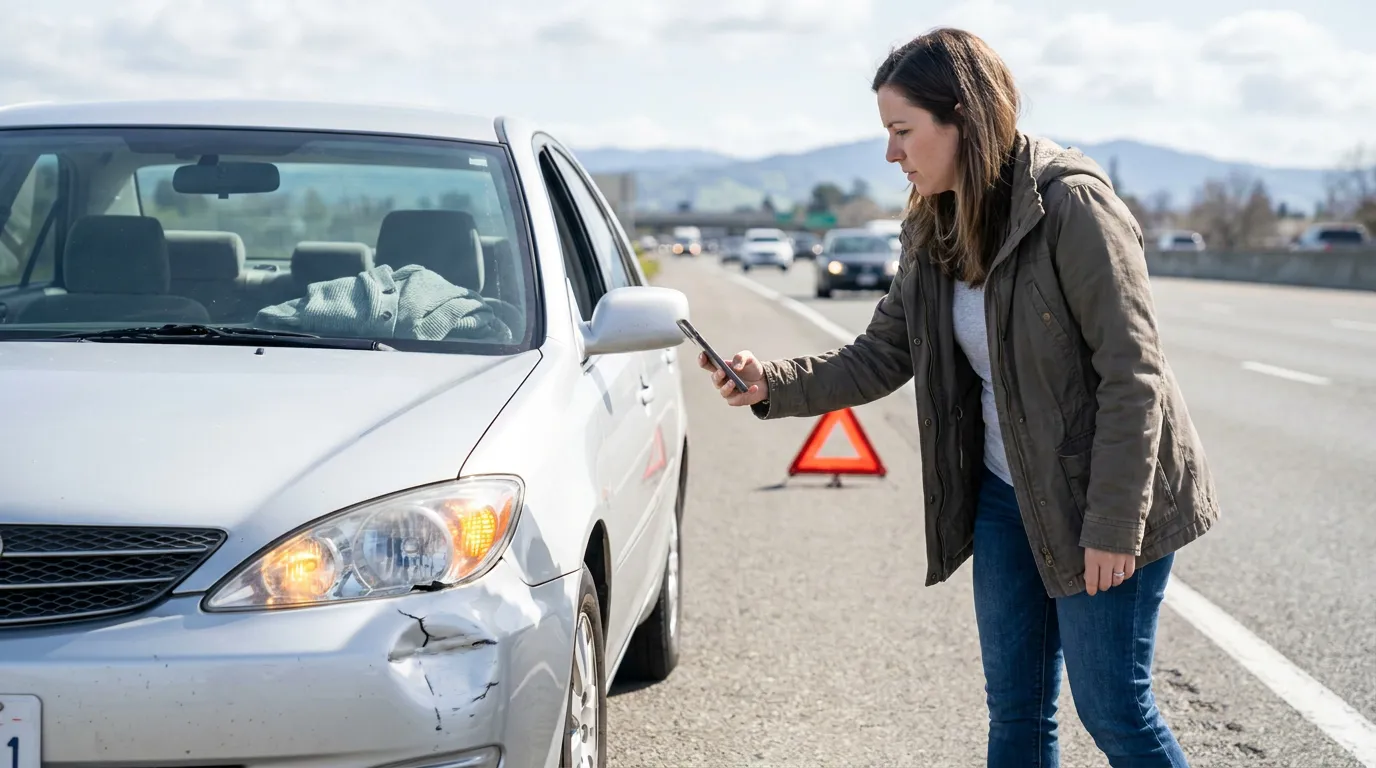
An underinsured motorist claim generally arises when another driver causes your injuries, carries liability insurance, but not enough of it to cover what you actually lost. California defines an "underinsured motor vehicle" under Insurance Code § 11580.2(p)(2) as a vehicle insured for liability at limits less than the uninsured/underinsured motorist limits carried by the injured insured. If a driver on Highway 50 carries a minimal liability policy and leaves you with a spinal fracture, months out of work, and six figures in treatment, that policy can disappear fast. Your own UIM coverage may then step in to pay the gap between the at-fault driver’s limits and your damages, up to your own policy limit.
If a serious crash has left you facing bills that exceed the other driver’s coverage, timing matters. California’s civil statute of limitations for personal injury claims is generally two years from the date of injury, and UIM policies frequently impose their own contractual notice and demand deadlines that can run even sooner. The Law Offices of Dale R. Gomes has handled these fights against insurance carriers for decades. Call 916-706-1351 or schedule your free consultation before a deadline closes the door.
How Underinsured Motorist Coverage Actually Works in California
UIM coverage is generally not a lawsuit against a stranger; it is typically a claim against your own insurer under your own contract. The California Department of Insurance explains in its consumer auto insurance guide that UM/UIM coverage protects drivers when the at-fault party has no insurance or insufficient insurance, and that UIM benefits generally pay the difference between the at-fault driver’s limits and your damages, up to your policy’s UIM limit. That structure surprises many people: you pay premiums for years, then discover that collecting requires the same pressure you’d apply to any opposing carrier.
The math is what makes these claims worth pursuing after catastrophic collisions. Suppose the at-fault driver carries $30,000 in bodily injury coverage and you carry $250,000 in UIM. If your case is worth $200,000, the underlying policy pays its limit and your UIM coverage may cover the remaining exposure, subject to policy terms and offsets. Carriers still dispute both liability and damages, which is where litigation experience can change the trajectory.
The Offset Rule That Reduces What You Collect
UIM coverage is generally a gap-filler, not a second full recovery. Insurance Code § 11580.2(p)(4) provides that the UIM insurer’s obligation is generally reduced by amounts paid by or on behalf of the underinsured motorist, so the maximum available is typically the difference between your UIM limits and what the liability carrier paid. The liability settlement you accept is generally credited against your UIM limits rather than stacked on top of them.
That offset can make premature settlement genuinely risky. Most UIM policies require written consent from your own insurer before you settle with the other driver, and settling without it can jeopardize your UIM benefits, though consequences may depend on whether the insurer’s subrogation rights were actually prejudiced. Before signing any release, notify your own carrier in writing and document its response.
💡 Pro Tip: Request a certified copy of your full policy, including the UM/UIM endorsement, not just the summary. The consent-to-settle and arbitration provisions live in that language and often control the outcome.
Why Some Sacramento Drivers Discover They Have No UIM Protection
California does not mandate you purchase this coverage, only that insurers offer it. Insurance Code § 11580.2(a)(1) generally provides that a covered auto liability policy shall not be issued unless it also offers, at the insured’s option, uninsured motorist coverage, and insureds may reject it in writing. Under § 11580.2(b), coverage is generally offered equal to the bodily injury liability limits unless the insured selects a lower amount in writing, subject to statutory minimums.
Low-cost policy disclosures show how modest baseline figures can be. Insurance Code § 11629.75(a) requires that applicants for a low-cost auto policy be notified they may purchase uninsured motorist bodily injury coverage of $10,000 per person and $20,000 per accident. Related provisions in Section 11629.71 address how that coverage is offered within the low-cost program. Those numbers rarely approach the cost of a single air-ambulance transport or cervical fusion.
| Scenario | Who Pays First | Where UIM Fits |
|---|---|---|
| At-fault driver has no insurance | No liability carrier available | UM coverage responds, subject to policy terms |
| At-fault driver has low limits | Liability carrier pays its limit | UIM may cover the gap, less the credited offset |
| Hit-and-run driver never identified | No identified carrier | UM may apply if policy conditions are met |
Coverage Details Drivers Rarely Know About
Some benefits inside UM coverage go unclaimed simply because nobody mentions them. Insurance Code § 11580.011(c) generally requires that an auto liability policy providing uninsured motorist property damage coverage also cover replacement of a child passenger restraint system damaged or in use during an accident, where coverage otherwise applies. Families hurt in a collision on I-80 or near the Capitol Mall corridor can generally request that replacement as part of the claim, subject to the policy’s deductible and conditions.
Building an Underinsured Motorist Claim Sacramento Insurers Cannot Easily Discount
Your own insurer’s interests may diverge from yours the moment you submit a UIM demand. California insurers handling UM/UIM claims owe their insureds duties of good faith and fair dealing arising from the insurance contract, as recognized in cases such as Gruenberg v. Aetna Ins. Co. (1973) 9 Cal.3d 556 and Egan v. Mutual of Omaha Ins. Co. (1979) 24 Cal.3d 809. That duty exists, but it doesn’t mean adjusters value your damages the way a Sacramento Superior Court jury might, and not every disputed valuation amounts to bad faith.
Documentation often separates a fully valued claim from a discounted one. Steps that generally strengthen a claim include:
- Obtaining the full traffic collision report and photographing the scene, vehicle damage, and injuries
- Seeking prompt medical evaluation and following through on referrals without long treatment gaps
- Preserving wage records, employer statements, and documentation of work restrictions
- Requesting the at-fault driver’s policy limits in writing and notifying your own carrier early
- Declining recorded statements to any adjuster until you understand how they may be used
If the at-fault driver carries nothing at all, the analysis shifts. Readers weighing whether a direct action makes sense should review our discussion of whether you can sue an uninsured driver after a collision, since the recovery path often differs substantially from a UIM claim.
How Disputes Over UIM Benefits Get Resolved
Arbitration, rather than a jury trial, frequently decides these disputes. Insurance Code § 11580.2(f) generally provides that disputes over whether the insured is legally entitled to recover damages from the uninsured or underinsured motorist, and the amount of those damages, are determined by arbitration, subject to the statute’s procedural requirements. Where UM/UIM limits exceed the financial responsibility minimums, either party may demand a court trial instead. Because arbitration’s scope is generally limited to entitlement and damages, bad faith claims against the carrier typically proceed separately in court.
Arbitration is generally a real adversarial proceeding, not a formality. Carriers often retain defense counsel, hire their own medical examiners, and challenge causation aggressively in catastrophic injury cases. A Sacramento car accident attorney with genuine trial experience may approach arbitration the same way as a courtroom trial, because the carrier’s risk evaluation generally depends on who is sitting across the table.
One Statute That Can Eliminate Pain and Suffering Damages
Your own insurance status at the time of the crash can restrict what you recover. Under Civil Code § 3333.4(a)-(b), a person generally may not recover non-economic losses if they owned a vehicle involved in the accident that was not insured as required by California’s financial responsibility laws, and an insurer generally is not liable, directly or indirectly, to indemnify such a person’s non-economic losses. Courts have applied this provision to bar pain and suffering recovery in qualifying circumstances, though it contains exceptions, including for injuries caused by a driver convicted of DUI, and economic damages such as medical expenses and lost earnings generally remain recoverable.
💡 Pro Tip: Confirm your policy was actually in force on the date of loss, not merely issued. Even brief lapses for nonpayment can trigger the § 3333.4 bar and reshape the entire value of a claim.
Frequently Asked Questions
1. How long do I have to bring a UIM claim in California?
Two separate clocks generally run at once. The statute of limitations for the underlying personal injury claim is generally two years from the date of injury, while your UIM policy and Insurance Code § 11580.2(i) impose their own deadlines for filing suit, demanding arbitration, or otherwise preserving the claim. Exceptions like delayed discovery or tolling apply narrowly, so waiting is rarely advisable.
2. Will filing a UIM claim raise my premiums?
California law generally restricts surcharging a policyholder solely because of a not-at-fault loss, though practices vary by carrier. You paid premiums specifically for this protection. Weigh any rating concern against the realistic cost of an uncompensated catastrophic injury.
3. Can passengers make an underinsured motorist claim?
In many cases, yes. UM/UIM coverage commonly extends to resident relatives and occupants of the insured vehicle, subject to the definitions in the policy and Insurance Code § 11580.2. Whether a particular passenger qualifies depends on the specific policy language and facts.
4. What if the other driver’s insurer offers its policy limits right away?
Treat that offer as a signal, not a resolution. A quick limits tender often means the carrier recognizes the injuries may far exceed its exposure. Before accepting, you generally need written consent from your own UIM carrier, since settling without it can put your UIM benefits at risk.
5. Does my health insurance affect the UIM recovery?
Health plans and medical providers frequently assert liens or reimbursement rights against settlement proceeds, depending on the plan type and governing law. Resolving those claims is generally a distinct negotiation alongside the UIM claim, and handling liens carefully can meaningfully affect the amount that reaches you.
Protecting the Coverage You Already Paid For
An underinsured motorist claim Sacramento residents pursue is generally a contract dispute with their own insurer, governed by Insurance Code § 11580.2, shaped by the credits and offsets in § 11580.2(p)(4), and limited in certain circumstances by Civil Code § 3333.4. Outcomes depend heavily on the policy language, the strength of the medical evidence, and the timing of every notice and settlement decision. Carriers generally evaluate these claims based on risk, and risk depends on preparation.
Dale Gomes has tried more than 100 jury trials and built a practice on holding insurance companies accountable rather than accepting discounted offers. The firm represents seriously injured clients throughout the region, including El Dorado Hills and Folsom, and prepares every underinsured motorist claim Sacramento families bring as though it will be decided by a jury. Because California’s deadlines are unforgiving, reach out to The Law Offices of Dale R. Gomes today. Call 916-706-1351 or request your case review now to protect your claim.
Disclaimer: This content is for informational purposes only and is not legal advice. Every case is unique, and results may vary. Consult an attorney about your specific circumstances.