
What Sacramento Rideshare Passengers Need to Know About California’s New Insurance Limits
Key Takeaways: SB 371, signed in October 2025 and effective January 1, 2026, reduced the uninsured and underinsured motorist coverage that transportation network companies must provide during rideshare trips to $60,000 per person and $300,000 per accident, down from the previous $1 million requirement, while leaving third-party liability coverage at $1 million. This matters most when an uninsured or underinsured driver causes catastrophic injuries and medical bills exceed the new minimum. Because local governments are generally preempted from setting their own rideshare insurance rules, a statewide bill was the practical path to this change. Injured passengers may want to look beyond the rideshare policy to personal auto coverage, household member policies, and potentially liable third parties. Strict deadlines may apply, including California’s two-year personal injury statute of limitations, the six-month claim-presentation requirement for most public entity claims, and policy-specific UM/UIM notice and arbitration provisions. Prompt documentation, written notice to your own carrier, and trial-ready representation can be important when available coverage is limited.
If you are injured in an Uber or Lyft crash in California, the amount of uninsured and underinsured motorist coverage available to you has changed significantly. Under SB 371, beginning January 1, 2026, Uber passenger trips generally carry UM/UIM coverage of $60,000 per individual and $300,000 per accident, down from the $1 million requirement that previously applied during both Period 2 (when the driver was en route to pick up a passenger) and Period 3 (from the moment a passenger entered the vehicle until exiting). That shift can matter enormously when the at-fault driver carries little or no insurance and your medical bills climb into six figures.
If you or a loved one was seriously hurt in a rideshare collision, the team at The Law Offices of Dale R. Gomes is prepared to fight the insurance companies on your behalf. Call 916-706-1351 or reach out to our Sacramento injury team to discuss your options before critical deadlines pass.
How Rideshare Accident Insurance Coverage in California Actually Works
Rideshare insurance generally operates in layers depending on what the driver was doing at the moment of the crash. When a driver is logged off the app, only personal auto coverage applies. Once the app is on and a passenger is in the vehicle, the transportation network company’s commercial policy generally takes over, and that’s where the SB 371 changes bite hardest. Many personal auto policies contain commercial-use exclusions, so gaps can exist unless a rideshare endorsement is in place.
The distinction between liability coverage and UM/UIM coverage confuses nearly every injured passenger we speak with. Liability insurance pays people harmed by the rideshare driver’s negligence. UM/UIM coverage protects the passenger or driver when the at-fault party carries no insurance or not enough, and may also apply in certain hit-and-run situations if policy and statutory conditions are met. SB 371 preserves the $1 million liability requirement while sharply cutting the required UM/UIM layer.
California’s baseline statute for this coverage is Cal. Ins. Code § 11580.2. This section generally requires specified motor vehicle liability policies issued in California to include uninsured motorist coverage unless rejected in writing, and subdivision (p) defines underinsured motorist coverage as applying when the at-fault vehicle’s liability limits are less than the injured party’s own UM/UIM limits, with recovery reduced by amounts paid under the at-fault driver’s policy. You can review the full text of California’s uninsured motorist statute to see how those mechanics work.
What Changed Under SB 371 and When
The practical effect of the reform may be a significant narrowing of the safety net for rideshare passengers struck by uninsured drivers. Uber’s own statement on the reform notes that no other passenger vehicle in the state is required to carry any UM/UIM coverage, meaning rideshare riders may still receive protection ordinary passengers aren’t guaranteed. The company’s description of the California insurance reform sets out both the new limits and the retained liability figure. These are statutory minimums; a particular policy could provide more.
| Coverage Type | Before SB 371 | Effective Jan. 1, 2026 |
|---|---|---|
| UM/UIM per person | $1 million requirement | $60,000 |
| UM/UIM per accident | $1 million requirement | $300,000 |
| Third-party liability | $1 million | $1 million |
Readers should confirm current status directly through official sources. The California Legislative Information site maintains the authoritative record for SB 371, including bill text, amendments, and history. Because statutes can be further amended, the outcome in any individual case depends on the policy language and law in force on the date of the crash.
Why a Statewide Bill Was the Only Route
Local governments generally cannot write their own rideshare insurance rules. Under Cal. Bus. & Prof. Code § 7464(b), the state occupies the field in specified areas, including app-based driver licensing and insurance requirements, with TNC insurance also regulated at the state level through the Public Utilities Code. That preemption is why neither Sacramento nor the County could have adjusted these limits independently.
Who Counts as a Rideshare Driver Under the Statute
Cal. Bus. & Prof. Code § 7463(p) defines a "transportation network company" by cross-reference to Public Utilities Code § 5431(c), and § 7463(o) defines "rideshare service" accordingly. These definitions determine which companies and drivers fall within rideshare-specific insurance requirements, and different definitions may apply under other codes.
Putting $60,000 in Context
Sixty thousand dollars may be low for a catastrophic injury but high compared to some California baselines. Under the state’s low-cost automobile insurance program, Cal. Ins. Code § 11629.75(a) describes an optional uninsured motorist bodily injury coverage capped at $10,000 per person and $20,000 for all persons in one accident, far below the new rideshare figure.
Why This Reduction Hits Serious Injury Claims Hardest
A $60,000 per-person cap can be consumed by a single ambulance ride, emergency imaging, and two days of hospitalization. Passengers who suffer spinal fractures, traumatic brain injuries, or multiple orthopedic surgeries after a collision on Highway 50, I-80, or near the Capitol Mall area may incur medical costs that dwarf that figure. When the at-fault driver is uninsured and the rideshare UM/UIM layer is limited, identifying every other potentially available source of recovery often becomes the central task.
Those additional sources may include the injured person’s own auto policy, a household member’s policy, or a commercial policy covering a third vehicle. In some cases, a negligent third party other than the driver, such as a commercial trucking company or an entity responsible for a dangerous roadway condition, may bear responsibility. Whether any of these apply is fact-dependent and requires careful investigation.
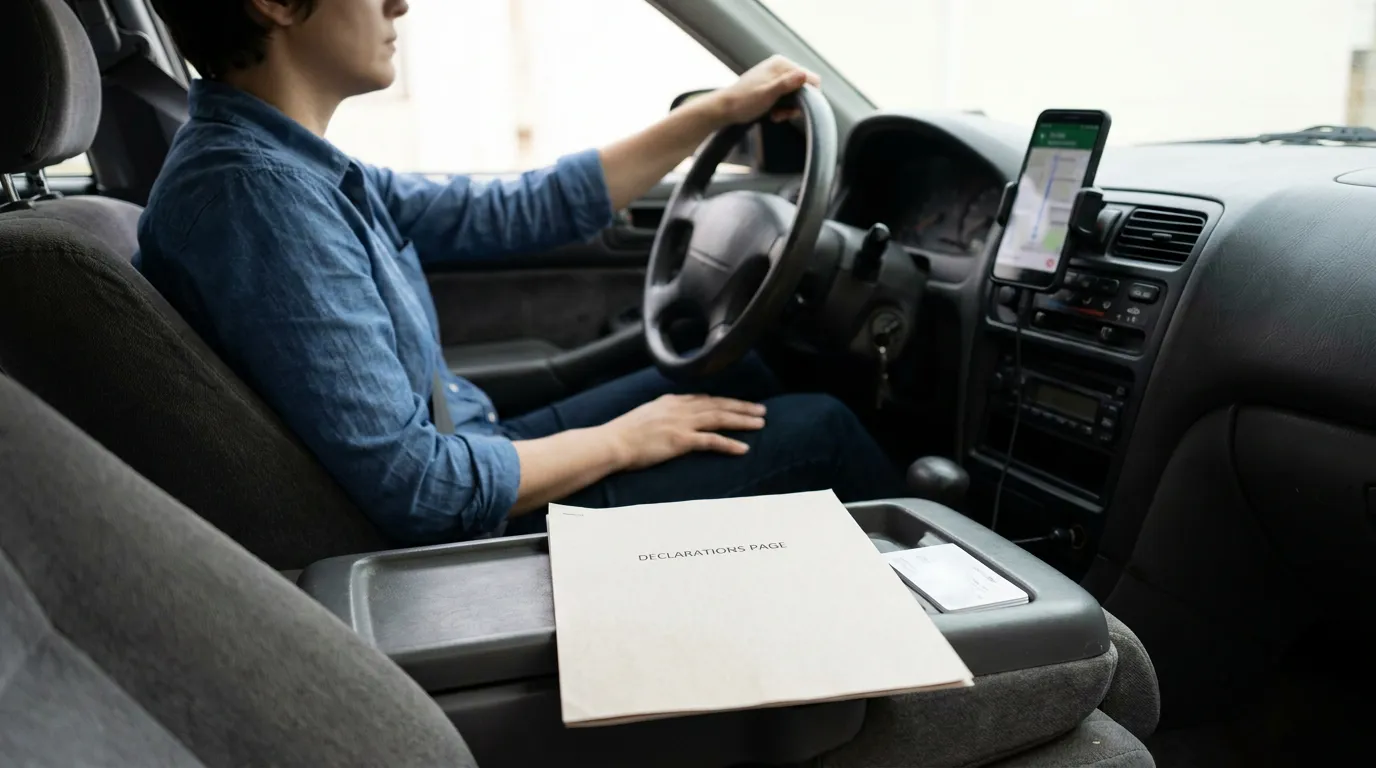
💡 Pro Tip: Request the full declarations page, not just a coverage letter, from every potentially applicable policy. Adjusters sometimes quote a single limit without disclosing excess or additional coverage that could materially change your recovery.
Building a Claim Around Reduced Rideshare Uninsured Motorist Limits
Proving negligence remains the foundation of every rideshare injury claim, regardless of how coverage limits change. You must generally establish duty, breach, causation, and damages. Lower policy limits don’t lower the evidentiary burden, and insurers may dispute causation aggressively when available coverage is tight. California’s comparative fault rules can also reduce a recovery in proportion to any fault attributed to the claimant.
Steps that often strengthen a rideshare claim include:
- Screenshotting the trip record in the app, including driver name, vehicle, route, and timestamps
- Obtaining the Sacramento Police Department or CHP traffic collision report as soon as it becomes available
- Photographing vehicle damage, roadway conditions, and visible injuries before they heal
- Seeking prompt medical evaluation and following through on all recommended treatment
- Preserving medical bills, lost wage documentation, and records of out-of-pocket costs
Insurance adjusters may request a recorded statement early, often before you understand the extent of your injuries. You are generally not required to give a recorded statement to another party’s insurer, although your own policy may impose cooperation duties, and statements made before a full diagnosis may later be used to minimize your damages. Consulting counsel before that conversation is often advisable.
Deadlines That Can End a Rideshare Claim Before It Starts
California’s civil statute of limitations for most personal injury claims is generally two years from the date of injury under Cal. Civ. Proc. Code § 335.1. Different periods can apply in some circumstances, such as claims involving minors or delayed discovery. Contractual UM/UIM claims may be governed by separate deadlines set in the policy and by statute, including demand-for-arbitration or suit requirements that can run sooner than the civil deadline. Missing either can bar recovery.
Claims involving a public entity generally follow a different, much shorter administrative track. Under Cal. Gov. Code § 911.2, a claim for personal injury against a public entity generally must be presented within six months of accrual, with a late-claim application process available in limited circumstances. That administrative claim process is a prerequisite to, and separate from, filing a civil lawsuit. Delayed discovery and tolling doctrines exist but apply only in limited, fact-dependent circumstances.
💡 Pro Tip: Put your own UM/UIM carrier on written notice promptly, even if you are unsure whether you will need that coverage. Many policies contain notice and consent-to-settle provisions, and failing to comply can jeopardize benefits.
Why Trial Readiness Matters When Coverage Is Capped
When available coverage shrinks, insurers may have more incentive to test whether a claimant will actually litigate. Dale R. Gomes brings more than 100 jury trials of courtroom experience to that fight, and cases are prepared from day one as though they will be tried in Sacramento Superior Court. That posture can influence how carriers evaluate a claim.
Our firm serves injured people throughout the region, including El Dorado Hills and Folsom, and understands how local juries and local roadways can factor into case value. A Sacramento rideshare accident lawyer who knows the venue may be better positioned to assess whether a settlement offer reflects the potential exposure. Outcomes always depend on the particular facts, evidence, and applicable policy language.
Readers looking for additional guidance can explore more on the topic. Our library covers evidence preservation, dealing with adjusters, and damages documentation, and you can find related articles on California car accident claims. Each situation differs, so use those resources as general education rather than advice on your specific claim.
Frequently Asked Questions
1. Does the $60,000 cap apply if I was a passenger or only if I was driving?
The reduced UM/UIM figures under SB 371 generally apply during rideshare periods when the app is on, which generally includes passenger trips. Whether the limit governs your claim depends on the app status at the time of the crash and the policy language in effect that date.
2. Can I stack my personal UM/UIM coverage on top of the rideshare policy?
Possibly, depending on your policy terms and the order of priority among applicable policies. California law and many policies contain anti-stacking and offset provisions, and Cal. Ins. Code § 11580.2(p) addresses how underinsured motorist coverage interacts with the at-fault driver’s liability limits, so coordination questions are highly fact-specific.
3. What if the rideshare driver caused my injuries rather than another motorist?
In that scenario the transportation network company’s liability coverage, rather than the UM/UIM layer, would generally be the applicable source. SB 371 retains the $1 million liability requirement for injuries and property damage in covered accidents.
4. How do I confirm the current status of SB 371?
The official legislative record for the 2025-2026 session reflects introduction dates, committee action, amendments, and final disposition, and enacted changes are reflected in the amended code sections. Because coverage figures can be amended in later sessions, verifying the current statutory text against the governing policy is important.
5. Do I still have a case if my damages exceed all available coverage?
Possibly. Additional defendants, umbrella policies, or commercial policies may be identified through investigation, though whether recovery beyond the primary limits is achievable depends entirely on the facts developed in your case and the collectability of any judgment.
Protecting Your Recovery Under California’s New Rideshare Rules
SB 371 reshaped rideshare accident insurance coverage in California by cutting required UM/UIM protection to $60,000 per individual and $300,000 per accident while preserving the $1 million third-party liability requirement. For passengers with catastrophic injuries, that reduction can make early investigation, thorough documentation, and aggressive pursuit of every available policy more important than ever. California’s legislative framework aims to protect the safety of both drivers and consumers, but protection on paper only helps if you act within the applicable deadlines.
Do not wait for an adjuster to tell you what your claim is worth. Contact The Law Offices of Dale R. Gomes today by calling 916-706-1351 or by scheduling your free case review, because California’s statute of limitations will not pause while you decide.
Disclaimer: This content is for informational purposes only and is not legal advice. Every case is unique, and results may vary. Consult an attorney about your specific circumstances.