
Understanding Your First Court Date After a DUI Arrest in El Dorado County
Key Takeaways: A DUI arraignment in El Dorado County is your first formal court hearing where the judge reads charges, advises you of constitutional rights, and asks for your plea, typically at the branch of the El Dorado County Superior Court nearest or most accessible to where the arrest occurred, for many arrests this is the Placerville branch, while arrests near South Lake Tahoe are arraigned at the South Lake Tahoe branch. Charges usually stem from California Vehicle Code § 23152, though prior convictions or injuries can elevate a DUI to felony status under § 23550.5 and § 23566. The judge must advise you of key rights including counsel, remaining silent, and jury trial, and will appoint a public defender if needed. The court addresses bail or release, from own recognizance for misdemeanors to formal bail hearings for serious felonies. A separate DMV administrative suspension runs alongside your criminal case, requiring a hearing request within 10 days of arrest to contest. Securing experienced counsel early provides the strongest position to protect your rights.
A DUI arraignment in El Dorado County is the first formal court hearing where the judge reads charges, advises you of constitutional rights, and asks how you plead. This hearing sets the foundation for everything that follows. For DUI arrests in the county, arraignments occur at the branch of the El Dorado County Superior Court nearest or most accessible to where the arrest occurred; arrests in the western part of the county are typically arraigned at the Placerville branch, while arrests near South Lake Tahoe are arraigned at the South Lake Tahoe branch. Understanding what to expect helps protect your rights from the beginning.
If you are facing a first court date for DUI, experienced counsel matters. The trial-tested team at The Law Offices of Dale R. Gomes brings extensive courtroom experience to every case. Call us at 530-497-5921 or reach out through our secure contact page to discuss your situation today.
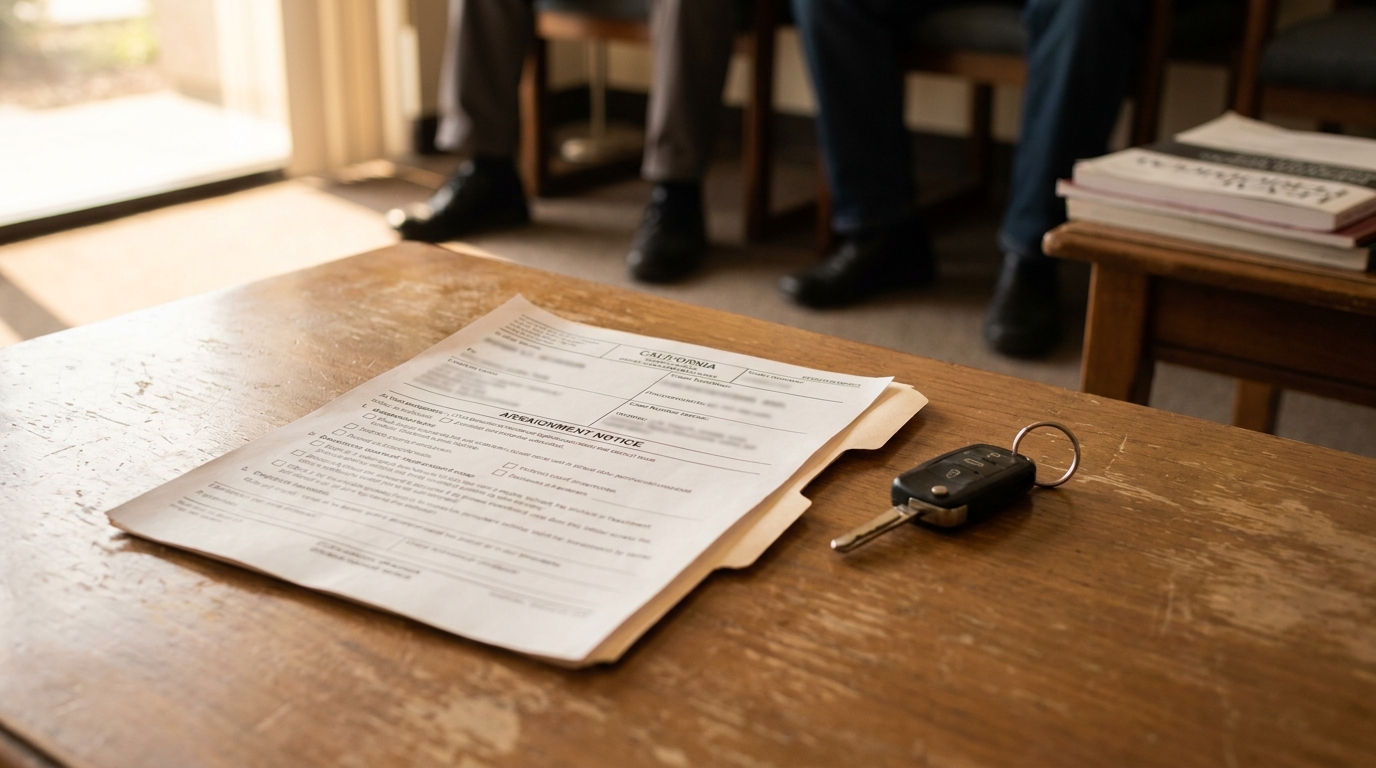
Where Your DUI Arraignment Takes Place and Why
The location of your arraignment is governed by statute. Under California Vehicle Code § 40502, the place specified in the notice to appear shall be before a magistrate within the county who has jurisdiction and is nearest or most accessible to the place where the arrest was made; or, upon demand, before a judge or magistrate at the county seat, but only if the person arrested resides, or their principal place of employment is located, closer to the county seat than to the nearest or most accessible magistrate. For DUI arrests in El Dorado County, this generally means appearing at the branch nearest or most accessible to where the arrest occurred, often Placerville for western areas and South Lake Tahoe for eastern areas.
Our firm represents clients throughout the region, including El Dorado Hills and Folsom. Knowing the local court process eases much of the stress of a first appearance. For a fuller picture of events leading up to this hearing, our overview of what happens after a DUI arrest walks through the steps from booking to court.
💡 Pro Tip: Bring all paperwork from your arrest, including your notice to appear and pink temporary license.
The Charges Read at a DUI Arraignment in El Dorado County
The formal charge read at your arraignment is most commonly drawn from California Vehicle Code § 23152. This statute makes it unlawful to drive under the influence of alcohol, to drive with a BAC of 0.08% or more, to drive under the influence of any drug, or to drive under the combined influence of alcohol and a drug. Commercial drivers face a lower threshold of 0.04% BAC. Understanding which subdivision applies shapes the entire defense strategy.
California sets different blood alcohol thresholds depending on the driver. According to the state’s published guidance on legal BAC limits, it is illegal to drive at or above:
- 0.08% or higher if you are over 21 years old
- 0.01% or higher if you are under 21 years old
- 0.01% or higher at any age if you are on DUI probation
- 0.04% or higher if you drive a vehicle requiring a commercial driver license
| Charge Type | Governing Statute | Possible Classification |
|---|---|---|
| Standard alcohol or drug DUI | Veh. Code § 23152 | Misdemeanor |
| DUI within 10 years of a felony DUI | Veh. Code § 23550.5 | Felony |
| DUI with injury and two or more priors | Veh. Code § 23566 | Felony |
Prior convictions can dramatically change the severity of the charge. Under California Vehicle Code § 23550.5, a DUI occurring within 10 years of a prior felony DUI conviction may be charged as a felony, carrying potential state prison time and mandatory license revocation. Under California Vehicle Code § 23566, when a DUI causes injury and the defendant has two or more prior DUI convictions within 10 years, the offense can carry a state prison sentence of two, three, or four years, fines between $1,015 and $5,000, and mandatory license revocation.
Your Rights at a Criminal Arraignment in El Dorado County
At every arraignment, the judge must advise you of fundamental constitutional protections. Key defendant rights include the right to an attorney, the right to remain silent, the right to a speedy trial, the right to a jury trial, and the right to cross-examine witnesses. These rights are central to a strong defense.
Language should never be a barrier to justice. If the defendant does not understand English, the judge must appoint an interpreter at no cost. Representation is available regardless of financial means. If you cannot afford a lawyer, the judge will appoint one, typically a public defender.
💡 Pro Tip: Exercise your right to remain silent at the courthouse. Casual comments can be used against you.
How the Plea Is Entered on Your First Court Date
Entering a plea is one of the most consequential moments of the arraignment. The most common pleas are guilty, not guilty, or no contest, and you should consult your lawyer before pleading guilty or no contest. A premature plea can foreclose defenses and diversion options you may not realize exist.
A common misconception involves bail deposits and pleas. Under California Vehicle Code § 40519, depositing bail does not constitute entry of a plea, and a not guilty plea generally must be made in court at arraignment. This is why appearing with experienced counsel is important.
How a DUI Lawyer in El Dorado County Approaches Bail and Release
The court will address whether you remain in custody or are released pending future hearings. The judge may allow release on your own recognizance, and someone charged only with misdemeanors is typically released this way.
Felony-level allegations can trigger a dedicated bail hearing. Under California Penal Code § 1270.1, if the DUI charge rises to a serious or violent felony level, the court must hold an open-court bail hearing, where the judge considers your past court appearance record, the maximum potential sentence, and the danger posed to others if released.
There is also a path to release before the arraignment date. Under California Penal Code § 1295, a defendant or any other person may deposit the scheduled bail amount with the clerk, and upon presenting proof of that deposit to the officer holding them, the defendant must be discharged. A working knowledge of the California arraignment process helps clients understand how these steps fit together.
💡 Pro Tip: If you have a clean record of court appearances, share that history with your attorney early.
The DMV Suspension Running Alongside Your Criminal Case
A criminal arraignment is not the only deadline you face after a DUI arrest. When a driver is arrested for DUI with a BAC of 0.08% or more, under California Vehicle Code § 13353.2 the DMV imposes an administrative suspension; the arresting officer typically serves an order of suspension with a temporary license, and the suspension takes effect 30 days after arrest unless a hearing is timely requested. This administrative suspension is separate from and runs concurrently with the criminal case.
Time is critical for protecting your driving privileges. Defendants have only 10 days from arrest to request a DMV Administrative Per Se hearing to contest the suspension, and an attorney can fight both the DMV suspension and the criminal charges simultaneously. Missing this window can result in automatic suspension regardless of the criminal case outcome.
Building a Defense from the Very First Hearing
The arraignment is the launching point for your defense strategy. A capable advocate examines whether officers had probable cause for the stop, whether chemical testing was properly administered, and whether your rights were respected throughout the arrest. These early questions shape motions, negotiations, and trial preparation.
Our firm is recognized for taking cases to trial when the facts demand it. With more than 100 jury trials of courtroom experience, attorney Dale Gomes is a trusted El Dorado County DUI attorney who pushes back against the prosecution at every stage. Early, aggressive preparation often makes a meaningful difference.
💡 Pro Tip: Write down everything you remember about the stop and arrest immediately. Your account can reveal procedural weaknesses worth challenging.
Frequently Asked Questions
1. Do I have to attend my DUI arraignment in person?
In many misdemeanor cases, an attorney may appear on your behalf, but felony charges generally require your presence. Confirm your specific obligations with counsel before the hearing date.
2. What happens if I plead not guilty at the arraignment?
A not guilty plea preserves your rights and moves the case toward pretrial proceedings. This allows your attorney to review evidence, file motions, and pursue reductions or dismissals.
3. Can my license be suspended before I am convicted?
Yes, the DMV suspension process is administrative and runs independently of the criminal case. Requesting a hearing within 10 days of arrest is required to contest that suspension.
4. Will a first-time DUI always be charged as a misdemeanor?
Not necessarily, because prior convictions and aggravating factors can elevate the charge. Statutes such as Vehicle Code § 23550.5 and § 23566 may turn a DUI into a felony.
5. What if I cannot afford an attorney?
The court will appoint counsel if you cannot afford a lawyer. You retain the right to consult privately with an attorney about your defense options.
Protecting Your Future After a DUI Charge
A DUI arraignment in El Dorado County is far more than a formality; it defines the path your case will take. From the charges read under Vehicle Code § 23152 to the plea you enter, bail decisions under Penal Code § 1270.1 and § 1295, and the parallel DMV deadline under Vehicle Code § 13353.2, every detail influences the outcome. Acting quickly and understanding your rights gives you the strongest footing.
If you are preparing for your first court date, do not face the prosecution alone. Contact The Law Offices of Dale R. Gomes by calling 530-497-5921 or reaching out through our online case review form to put a trial-tested advocate in your corner today.